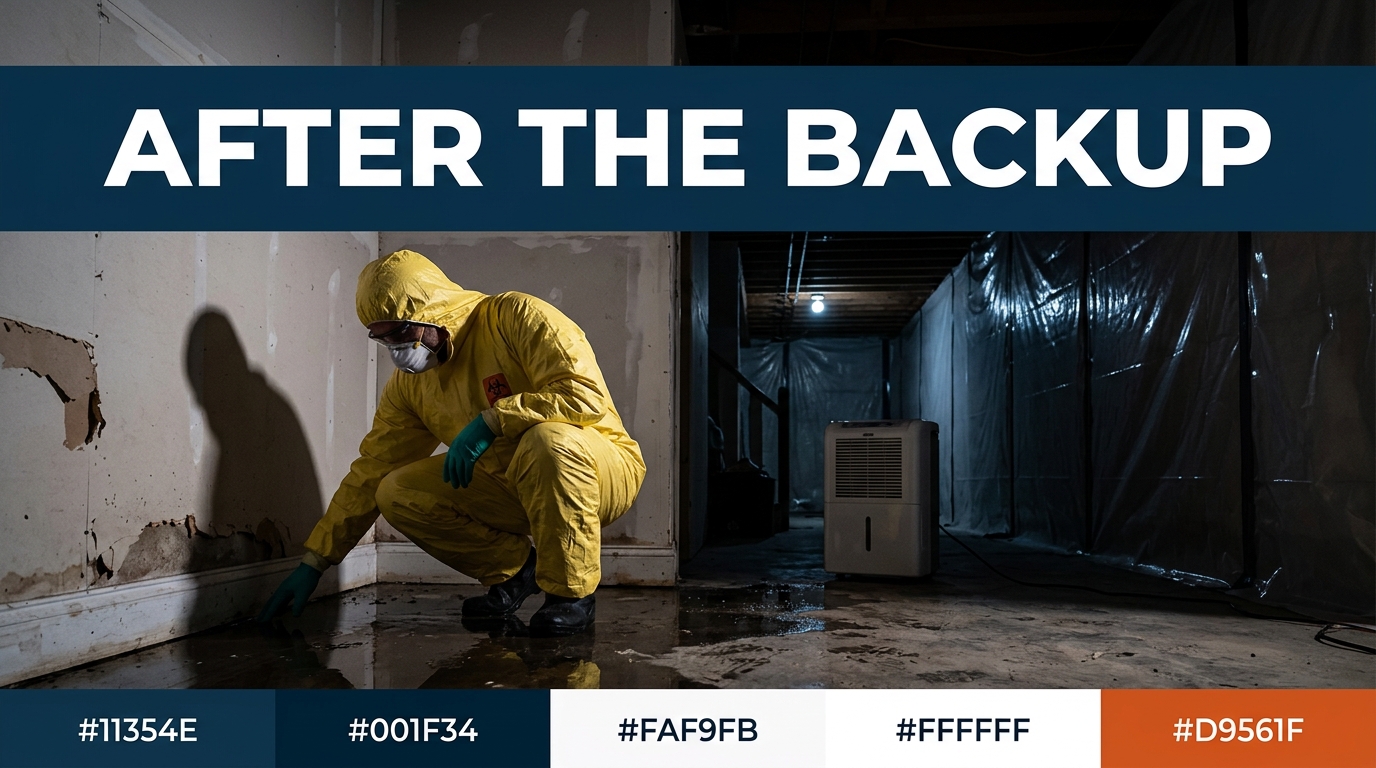
Sewage comes up through the floor drain, the toilet, the shower. You call a plumber. The plumber arrives, clears the line, and leaves. At that point, most homeowners assume the problem is solved. It is not. The pipe is fixed. The contamination is still there, and it is already deeper into your home than you can see.
A plumber repairs the mechanical failure that caused the backup. A certified biohazard cleanup specialist handles everything the sewage touched, including subfloor, wall cavities, and air. Those are two separate jobs, and the second one must start within hours of the first.
What You Are Looking at When Sewage Backs Up
Restoration professionals classify water in three categories by contamination level. Sewage is Category 3, the highest. The IICRC defines Category 3 water as grossly contaminated material containing pathogenic agents and toxic substances. This includes E. coli, Salmonella, Shigella, norovirus, hepatitis A, Giardia, and Cryptosporidium, among others. These are not trace amounts. Raw sewage can carry more than 50 pathogenic bacterial species, and those organisms do not die when the water recedes. Research published by the University of Maryland found harmful bacteria present in homes more than six months after sewage had cleared visually, with some bacteria resistant to standard antibiotics.
The smell is a signal, not the hazard itself. The actual hazard is invisible and does not stay where the water was. Within minutes of contact, sewage wicks into porous materials: drywall, wood subfloor, insulation, carpet padding. If an HVAC system is running during or after the backup, aerosolized particles move through ductwork and into rooms that never got wet. By the time the plumber's truck is out of the driveway, the contamination zone is almost certainly larger than the wet zone.
The First Hour: What to Do Before Anyone Arrives
Speed matters here, but so does doing the right things in the right order. Rushing into the affected area without taking these steps first can spread contamination to clean parts of your home.
What the Plumber Does and Where That Job Ends
A licensed plumber diagnoses and repairs the mechanical failure that caused the backup. That might be a root intrusion in the lateral line, a grease blockage in the municipal main, a collapsed pipe section, or a failed sump or ejector system. The plumber clears or repairs the line so water flows correctly again. That work is essential and it has to happen first.
What a plumber's scope does not include is the contamination that sewage left behind. Plumbers are not trained in biohazard remediation, they do not carry the equipment for it, and most will tell you directly that cleaning up what came out of the pipe is a different job requiring different licensing and different protective protocols. This is not a gap or a failure in their service. It reflects what the trade actually covers. Knowing that in advance prevents the false confidence that sends families back into a hazardous space.
What a Biohazard Cleanup Specialist Actually Does
A certified biohazard remediation crew works in full PPE and follows protocols set by the IICRC for Category 3 water losses. Their job begins where the plumber's ends.
- Containment: physical barriers and negative air pressure to prevent contamination from spreading to unaffected areas of the building.
- Extraction: removing standing sewage water with commercial-grade equipment rated for contaminated material.
- Material assessment: testing and probing walls, subflooring, and insulation to find saturation that is not visible from the surface. Porous materials that absorbed sewage cannot be dried and reused. They are removed.
- Disinfection: applying EPA-registered antimicrobial agents to all surfaces that contacted sewage, including non-porous materials that can be cleaned rather than removed.
- Drying and monitoring: industrial air movers and dehumidifiers run for days, with moisture readings taken regularly to confirm structural drying is complete.
- Air quality: addressing HVAC systems and ductwork if contamination entered the air circulation path.
- Documentation: written records of conditions found, materials removed, and disinfection performed, which your insurance carrier will require.
Why Delay Increases Both the Health Risk and the Cost
Mold can begin to colonize wet organic material in as little as 24 to 48 hours under warm conditions. In fall, homes in the Midwest and Northeast are often still warm enough inside to support rapid mold growth even as outdoor temperatures drop. Bacteria in sewage-saturated drywall or subfloor do not need daylight or oxygen to multiply. Waiting to address contamination does not let the problem settle. It lets it grow.
The financial case for acting fast is just as direct. A sewage event treated within the first several hours typically affects a defined zone. The same event treated days later often requires removal of far more structural material because moisture has migrated and mold has begun. Insurance carriers recognize this distinction. Many policies separate the plumbing repair claim from the remediation claim, and the remediation coverage often carries conditions about timely response. A documented delay can give an adjuster grounds to reduce the payout.
How to Find the Right Cleanup Specialist
Not every water damage company handles biohazard cleanup. Sewage remediation requires specific certifications, proper waste disposal licensing for contaminated material, and equipment that general contractors do not typically carry. BioCleaners Directory is a free national directory built specifically for the biohazard restoration industry. You can search by ZIP code or state to find certified specialists near you, filter by the type of service you need, and get to the right company without sifting through general handyman listings or flood repair services that are not equipped for Category 3 work. When the plumber leaves, that is the moment to use it.