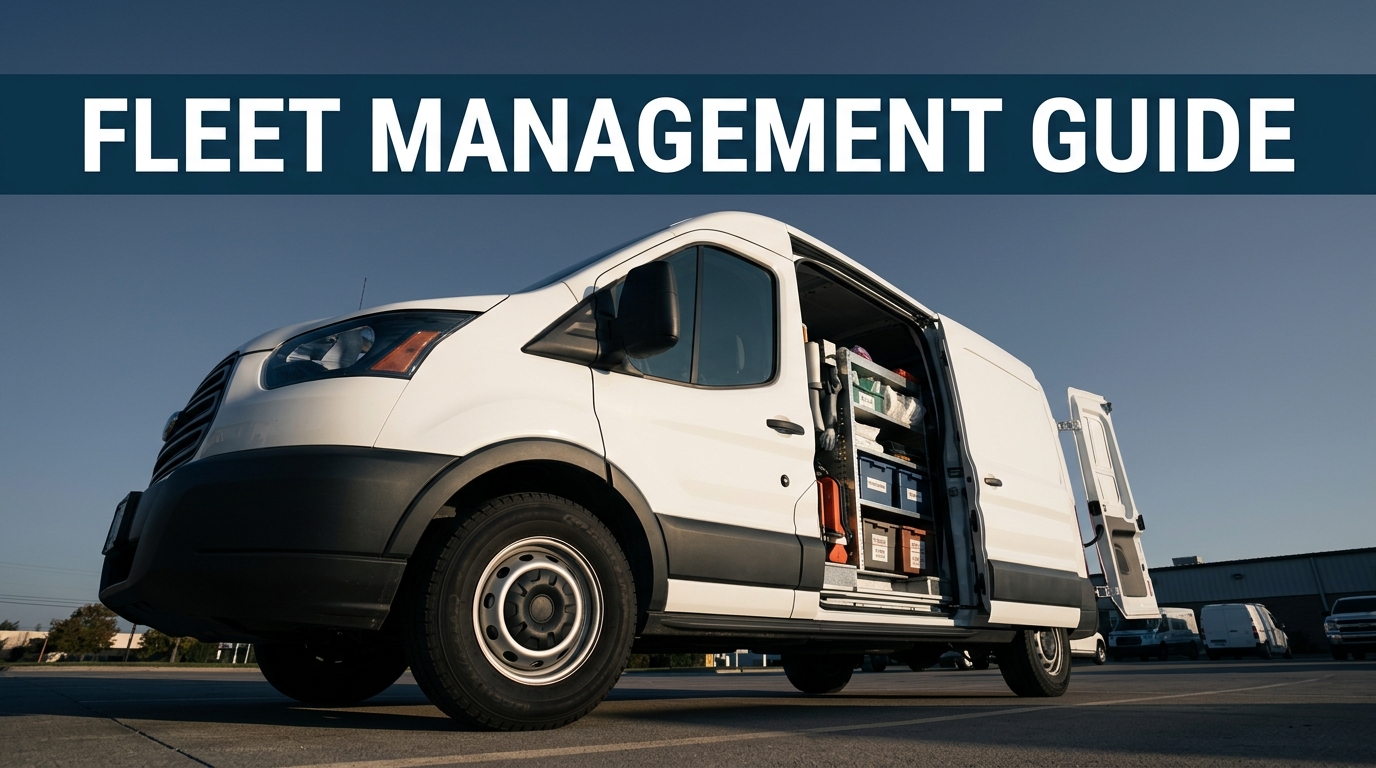
Most biohazard cleanup companies lose jobs, money, and clients not because of bad technicians, but because of bad logistics. A vehicle that shows up late, breaks down mid-week, or arrives missing critical PPE damages the company's reputation in ways no amount of marketing can repair. Fleet management is the operational backbone that keeps crews moving, equipment stocked, costs predictable, and compliance documentation airtight.
Biohazard cleanup companies that invest in fleet management systems, covering dispatch coordination, vehicle maintenance scheduling, fuel tracking, equipment inventory, and compliance documentation, reduce response times, control operating costs, and build the kind of reliability that generates referrals and repeat business.
Why Fleet Operations Drive Your Reputation
Referrals in the biohazard cleanup industry come from property managers, insurance adjusters, funeral directors, and law enforcement agencies. These are professional referrers who have options. They send work to companies that show up when they say they will, in vehicles that look and smell clean, with crews who have the right gear on the first visit. Fleet management is what makes that consistency possible at scale.
When a dispatcher can see where every vehicle is in real time, assign the nearest crew to an incoming call, and confirm that vehicle has been restocked after its last job, the entire customer experience improves. Speed and preparedness are the two things clients remember. Both come from how the fleet is managed, not from how the company is marketed.
Dispatch and Scheduling That Reduces Dead Time
Biohazard calls don't follow a schedule. An unattended death discovered on a Tuesday afternoon, a trauma scene called in at 6 a.m. on Saturday, a hoarding cleanup that was booked two weeks out but needs a crew swap because one technician called out sick. The only way to handle that volume without chaos is a dispatch workflow that connects job intake directly to vehicle availability and crew certification.
Fleet management software built for field service operations lets dispatchers filter available crews by certification level, location, and current job status. That matters in biohazard work because not every technician is cleared for every job type. A crew certified for bloodborne pathogen cleanup may not be cleared for methamphetamine lab remediation. Dispatching the wrong crew wastes time and creates liability.
- Match crew certifications to specific job requirements before dispatch.
- Track real-time vehicle location to assign the closest available crew.
- Log job start and end times to measure actual crew utilization.
- Set automated alerts when a job runs long so dispatch can adjust downstream assignments.
Route Optimization and Response Time

Response time is a competitive metric in biohazard cleanup. Families dealing with a trauma scene, property managers facing an unattended death situation, or facility coordinators managing a contamination event are not going to wait hours for a crew to figure out the best route. The company that calls back fast and arrives fast gets the job.
Route optimization tools built into fleet management platforms do more than save fuel. They reduce the gap between job completion and next dispatch, which directly increases the number of jobs a crew can handle in a day. For a company operating four vehicles, trimming 20 minutes of dead driving time per vehicle per day adds up to meaningful additional capacity across a week.
Compliance Documentation and Vehicle Records
Biohazard cleanup operations generate regulatory exposure. OSHA requirements around bloodborne pathogen exposure, state-level hazardous waste transport rules, and insurance carrier requirements all touch the fleet. If a vehicle is in an accident, if a technician reports an exposure incident, or if a client or insurer requests documentation, the company needs clean records or it faces serious problems.
Vehicle inspection logs, equipment certification records, incident reports, and maintenance histories should all live in one system, not across paper binders in each vehicle cab. When every record is digitally logged with timestamps, it becomes auditable. That's what insurance carriers and legal counsel need when something goes wrong, and it's what separates professional operations from liability risks.
- Pre- and post-shift vehicle inspection logs with technician sign-offs.
- Equipment calibration and certification dates for air scrubbers, HEPA vacuums, and ozone generators.
- Incident and near-miss reports tied to specific vehicles and dates.
- Biohazard waste transport documentation matched to each job record.
Preventive Maintenance and Avoiding Costly Breakdowns
A biohazard cleanup van that breaks down at 7 a.m. on a Monday doesn't just cost a repair bill. It costs the job it was dispatched to, the referral that job could have generated, and possibly the relationship with the referring agency. Emergency repairs on commercial vehicles are expensive. Unscheduled downtime is more expensive.
Fleet management systems track mileage and engine hours per vehicle and trigger maintenance alerts before problems develop. Oil changes, brake inspections, tire rotations, filter replacements, and DOT-required checks all get scheduled automatically based on actual usage data rather than someone's memory. Companies operating in Ohio and the broader Midwest region see accelerated wear from winter road salt and temperature swings, which makes fall the right time to audit every vehicle before the harder driving months arrive.
Fuel and Mileage Tracking as a Profit Tool
Fuel is one of the most visible fleet costs and one of the easiest to leak. Idle time, off-route driving, unauthorized personal use, and inefficient dispatch patterns all show up in the fuel bill before they show up anywhere else. Most small cleanup companies have no visibility into which vehicles are fuel-efficient and which are burning budget quietly.
Telematics-connected fleet management tools log fuel consumption, idle time, and mileage per trip. When a dispatcher can see that one vehicle idles for an average of 40 extra minutes per shift, or that a crew is consistently driving 15 miles out of the optimal route, those are fixable problems with real dollar values attached. Visibility turns a variable, uncontrolled cost into a managed one.
Equipment Inventory Across the Fleet
A biohazard crew that arrives on scene without enough containment material, missing a key piece of PPE, or short on documentation kits cannot start the job. The client called in a crisis. Showing up unprepared signals exactly the wrong thing at the worst possible moment.
Tracking equipment and supply inventory at the vehicle level, not just the warehouse level, is the difference between always being ready and sometimes being caught short. Fleet management systems that include asset tracking let operations managers see what's in each vehicle after every job and trigger restocking before the next dispatch. This matters most when a crew finishes a large trauma job late in the afternoon and gets assigned another call for the following morning.
- Personal protective equipment including hazmat suits, respirators, and gloves.
- Containment materials such as poly sheeting and biohazard bags.
- Decontamination tools including foggers, sprayers, and HEPA vacuum units.
- Documentation kits with chain-of-custody forms, waste manifests, and client consent paperwork.
- Ozone and hydroxyl generators, tracked by unit to confirm function and calibration status.
Scaling Operations Without Losing Control
Adding a second or third vehicle to a cleanup operation often feels manageable by instinct. Adding a fifth or sixth crosses a threshold where informal coordination breaks down. Jobs get double-booked. Vehicles go out missing gear. Maintenance gets deferred because no one owns the schedule. The revenue grows but so does the chaos, and margins shrink even as the top line improves.
Fleet management systems are what allow a growing cleanup company to expand its service area without the owner having to personally track every vehicle, every job, and every maintenance interval. The system holds that information and surfaces exceptions, meaning the owner only needs to intervene when something is off. That's the difference between a company that can grow and one that hits a ceiling because the owner can't clone themselves.