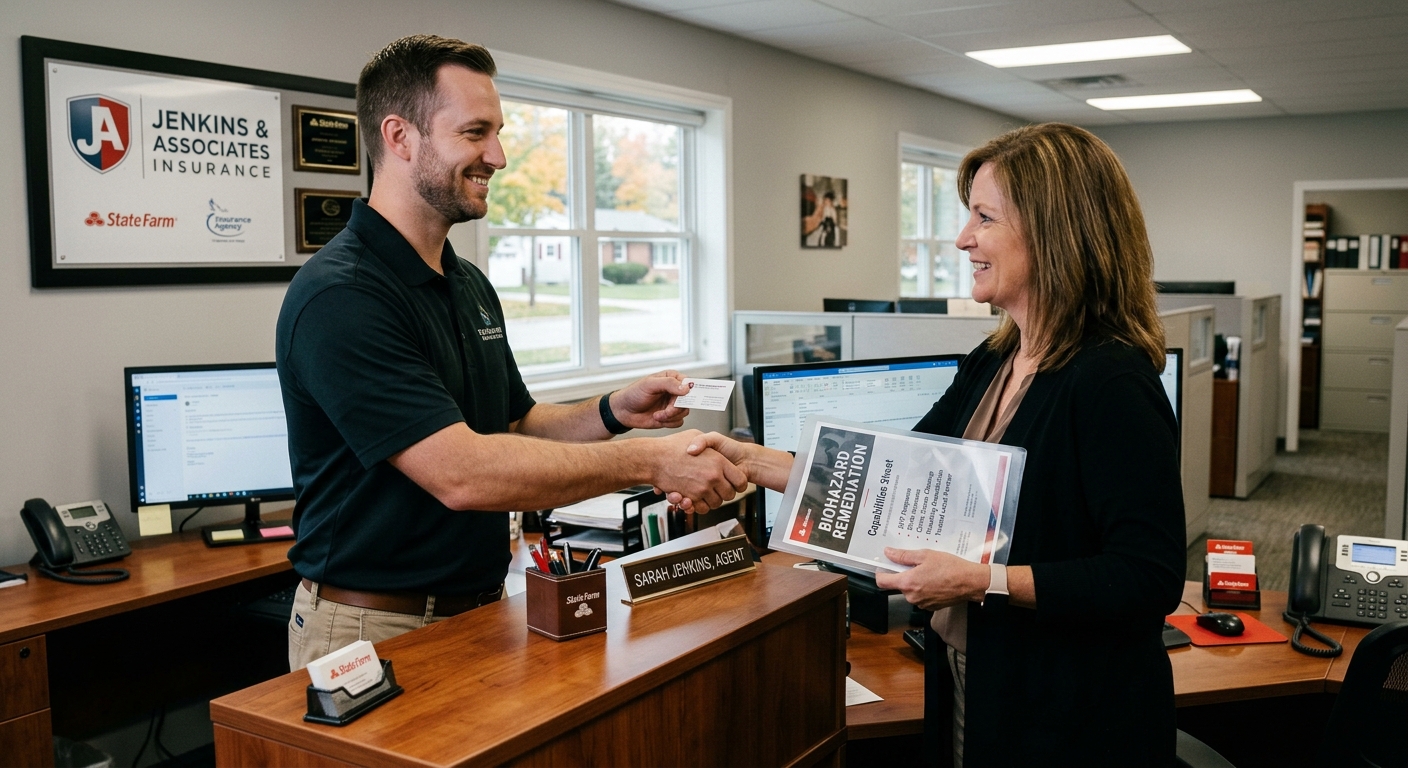
Walking into a local insurance agency in August, introducing yourself briefly, and leaving a business card with a one-page capabilities sheet is one of the most effective things a biohazard restoration company can do before claim season. It costs little, takes a few hours, and puts your name in front of the professionals who will need a trusted remediation contact when fall claim volume picks up. The goal is not to sell anything on the spot. The goal is to become the name an adjuster reaches for when a crime scene, hoarding situation, or biohazard loss comes across their desk.
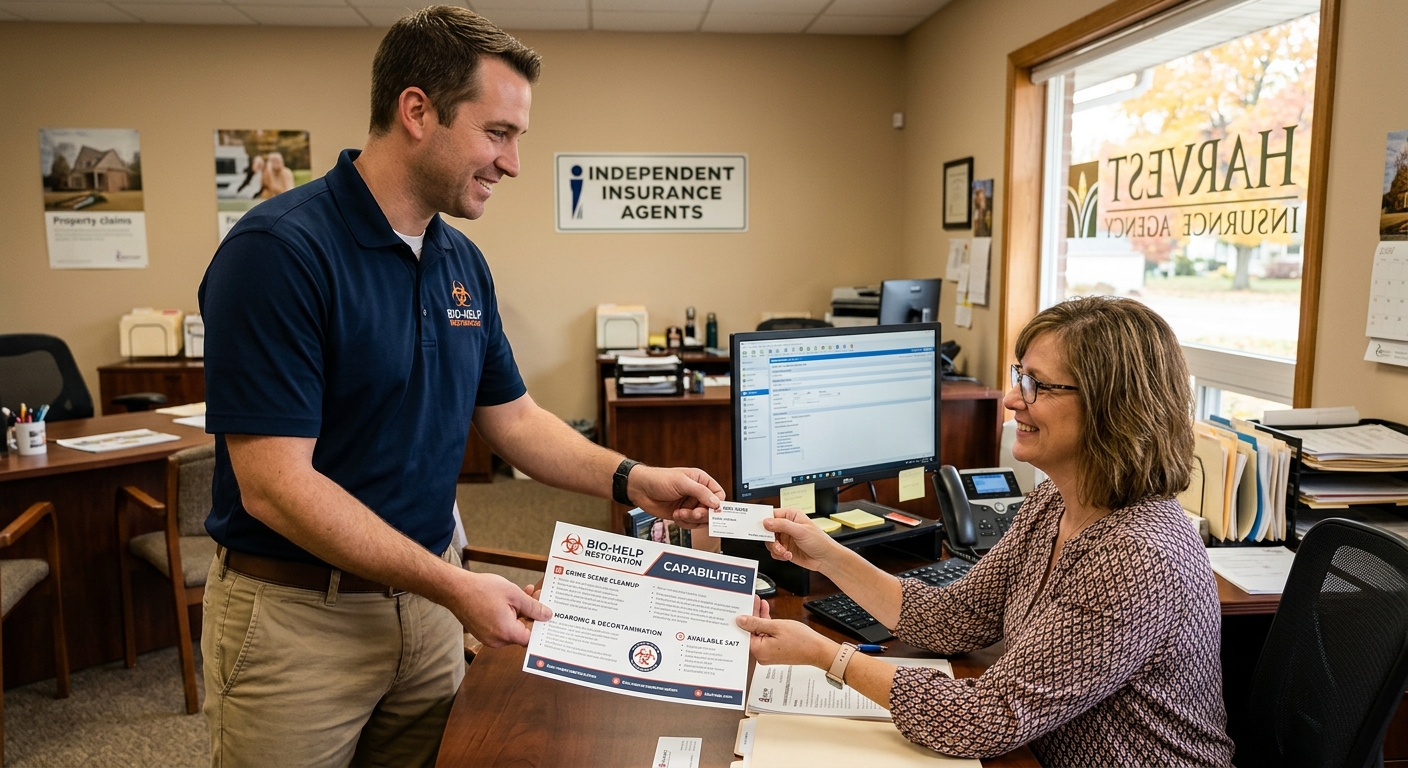
Visit local insurance agencies in person during August, introduce yourself briefly, and leave a business card attached to a clean one-page capabilities sheet. Adjusters who receive a face-to-face introduction before claim season are far more likely to remember and refer your company when a biohazard loss is assigned.
Why August Is the Right Time and Not a Day Later
Insurance adjusters operate on cycles, and the period leading into fall is one of the most important. Storm activity, property transitions, and the general uptick in claims that follows summer mean that by late September an adjuster's calendar fills fast. August is the window before that pressure arrives. Adjusters are more available, more willing to spend two minutes at the front desk, and more receptive to a new vendor introduction than they will be once claim volume spikes.
The competitive reality is that other restoration companies are aware of this window too. The ones who show up first, present themselves professionally, and leave something tangible behind earn the top-of-mind position that translates into the first call. Waiting until September means competing for attention with every other contractor trying to get in front of the same adjusters at the same time. August is when the groundwork pays off.
Understanding the Adjuster's Workflow Before You Walk In
Adjusters handle a steady stream of complex claims, and biohazard losses are among the most sensitive and time-pressured. When a hoarding remediation, crime scene cleanup, or infectious waste situation is assigned, the adjuster needs a qualified vendor quickly. They are not browsing directories at that moment. They are reaching for a name they already trust or a sheet of paper on their desk.
Your visit solves a real problem in their workflow. You are not interrupting them to pitch a service they may never need. You are making yourself available in advance so that when they do need a biohazard remediation company, the friction of finding one is already gone. Framing your visit this way, in your own head before you walk in, changes your tone from salesperson to resource. Adjusters respond to that difference immediately.
What to Bring: The Business Card and the Capabilities Sheet
Two physical items should leave your hand and stay in the agency. The first is a professional business card with your direct contact information. The second is a one-page capabilities sheet that tells the adjuster exactly what you do, where you operate, and why you are qualified to handle the specific losses they will need to address.
Why a Printed One-Pager Outlasts Digital Outreach
Email gets buried. A capabilities sheet placed on a desk stays visible. Adjusters often keep vendor reference sheets in a folder or tacked to a corkboard precisely because they need to find contacts quickly under pressure. A well-designed single page does what a forwarded email cannot: it sits in the physical environment where the adjuster works, ready to be picked up when a claim comes in.
The sheet should be clean and easy to scan in under thirty seconds. It is not a brochure and it is not a sales flyer. It is a professional reference document.
- Company name, logo, and direct phone number at the top
- Service categories listed clearly: crime scene cleanup, hoarding remediation, mold removal, biohazard decontamination, and any others you handle
- Service area by county, city, or region so the adjuster knows you cover their assignments
- Certifications and licensing that are relevant to insurance claims
- A line about response time, especially if you offer 24-hour availability
- Your insurance and bonding status, stated plainly
- A brief note about working directly with insurance carriers if that applies to your process
How to Conduct the Visit Itself
Your objective is a brief, professional introduction, not a sales meeting. Most agency visits will last two to five minutes. Some will be shorter if the adjuster is unavailable. That is fine. Leaving your materials with the front desk staff is still valuable, and a polite, professional interaction with any staff member contributes to the impression you leave behind.
The Face-to-Face Advantage No Digital Campaign Can Replace
An email can be deleted in a second. A social media post disappears in a feed. A personal visit creates a memory. Adjusters who have met you, even briefly, have a reference point when your name comes up later. They associate your company with a real person who took the time to show up. That association signals reliability, local availability, and professionalism in a way that no digital outreach can replicate.
This matters especially in biohazard restoration, where adjusters are trusting you to handle losses that are emotionally and legally sensitive. They need confidence that the vendor they refer can perform with discretion and competence. Walking through their door, presenting yourself professionally, and leaving a clear and well-prepared capabilities sheet communicates all of that before you have ever worked a single claim together.
Turning the Visit Into a Referral Relationship
The August visit is the first step in a longer relationship. The referrals that come from it will not always arrive immediately. Some adjusters will file your sheet and call you in October. Others will hold onto it for months before a qualifying loss lands on their desk. What matters is that you are in the file when that moment arrives, and that the adjuster associates your name with a professional who showed up in person and made the introduction easy.
Follow up in a low-pressure way after your initial visit. A brief email introducing yourself a week later, referencing the visit, keeps your name current without being aggressive. If a claim does come in and you handle it well, let the adjuster know you appreciate the referral. That closes the loop and opens the next one.
Your August Outreach Checklist
- Finalize and print your one-page capabilities sheet
- Order or reprint business cards if your contact information has changed
- Research local insurance agencies within your service area and identify the right contact at each
- Call ahead to confirm walk-in windows or schedule brief introductions
- Set a target number of visits per week to complete before September
- Prepare a short verbal introduction of two to three sentences
- Bring extra copies of your capabilities sheet to leave with front desk staff if the adjuster is unavailable
- Log each visit and set a follow-up reminder for two weeks out