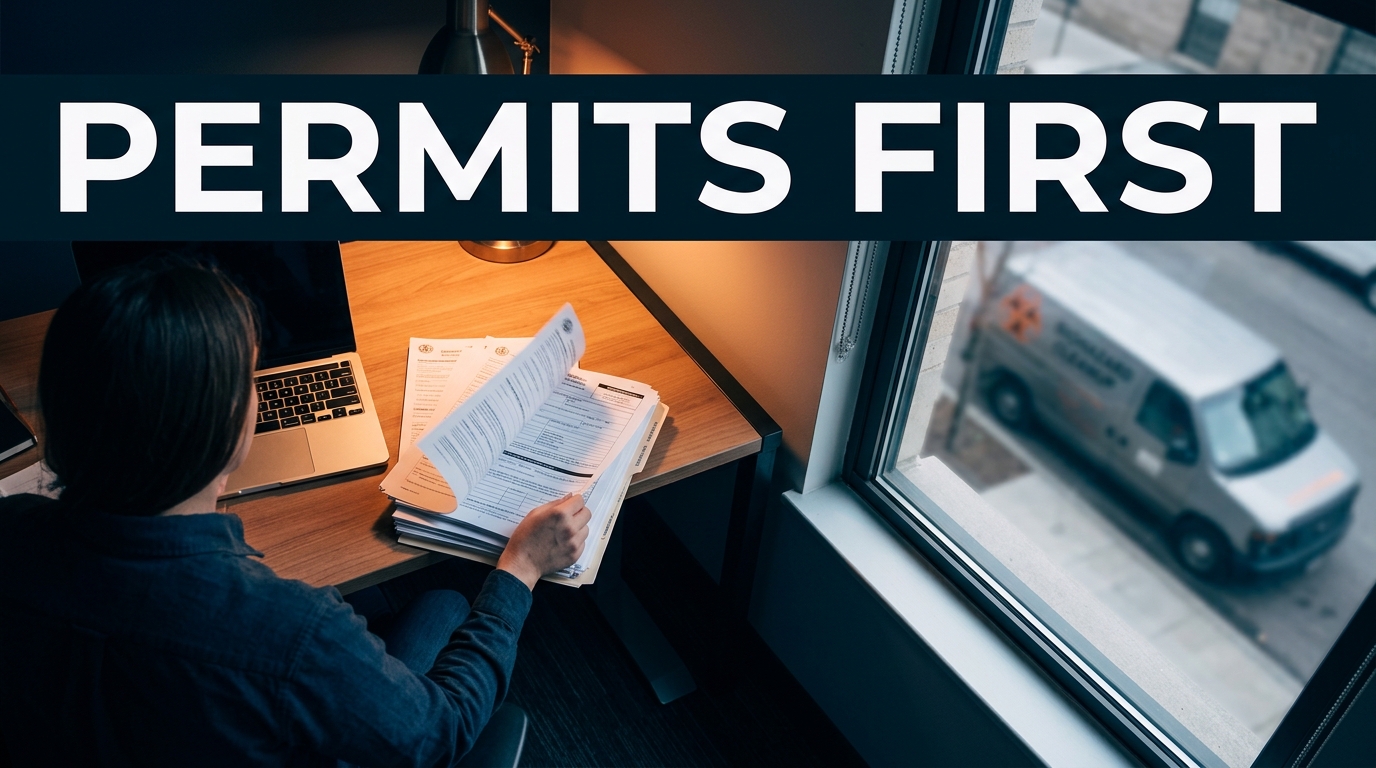
If you are planning to open a biohazard cleanup company this fall, the first item on your checklist is not a vehicle, not a logo, and not a quote from an insurance broker. It is a waste hauler permit. That permit is what tells every downstream step in your launch that you are a legitimate operator, not someone running gray-market cleanup out of a personal vehicle. Get the permit wrong, or get it late, and every other investment you make before it sits on shaky ground.
Start with waste hauler permits from your state environmental or health agency before any other launch step. Permits determine your legal ability to transport regulated biological waste, and most insurers, equipment lenders, and referral partners will not work with you until you can show them proof of compliance. Everything else follows from there.
Why the Permit Comes Before the Truck
New founders almost always think about equipment first. A cargo van, hazmat suits, HEPA vacuums, industrial disinfectants. That instinct makes sense because equipment feels like doing something. But buying a truck before your waste hauler permit is approved puts you in a position where you own a depreciating asset you cannot legally use for its intended purpose.
Waste hauler permits are issued by state environmental or public health agencies and govern the legal transport of regulated biological and medical waste. Without one, you cannot move biohazardous material from a job site to a licensed treatment or disposal facility. That is not a technicality. It is the core function of biohazard cleanup, and it is the function insurers underwrite.
Most commercial general liability carriers that write policies for biohazard remediation operators require documented proof of regulatory compliance before binding coverage. If you call a broker in September 2026 without a permit in hand, you will either be declined or quoted a policy that excludes the exact work you want to do. The permit is what makes your operation insurable.
The Correct Launch Sequence for Fall 2026

Below is the order of operations that legitimate biohazard cleanup operators follow. Each step depends on the one before it. Skipping ahead does not save time. It usually takes more time and costs more money to undo.
What Happens When Founders Skip Step One
The most common delay pattern in fall biohazard startup launches looks like this: a founder registers an LLC, buys a van, orders equipment, gets a website up, and then calls an insurer who asks for the waste hauler permit. The founder contacts the state agency and learns that permit processing takes six weeks. The equipment sits in a garage. The domain renews. No calls come in because there is nothing to call about yet.
Six weeks lost at the launch stage is not a minor inconvenience. For a company budgeting against startup costs, that is a month and a half of overhead with zero revenue opportunity. The permit process does not bend because you are ready to work. It runs on a fixed administrative timeline, and that timeline starts the day you submit the application, not the day you decide to.
The Permit as a Competitive Signal
Biohazard cleanup referrals come from people who are already under pressure: insurance adjusters managing claims, property managers dealing with tenant situations, law enforcement liaisons coordinating scene releases. None of these referral sources will hand a job to an operator they cannot verify. A waste hauler permit is one of the first things a serious referral partner checks.
That means your permit does double duty. It is a legal requirement and a credibility signal. Operators who have been through permitting carry a visible advantage over unlicensed competitors who are working without it, often at lower prices, and often until they get caught or turned away from a disposal facility. Your permit is the documentation that separates you from that category.
Working Backward from Your Target Open Date
Fall 2026 is already here. If your target open date is before the end of the year, your permit application needs to be submitted now or very shortly. Here is how to work backward from a realistic open date.
- Identify your target first-call date. Pick a specific date when you want to be operationally ready to accept and complete a job.
- Subtract the permit processing window. If your state takes six weeks, your application must be in six weeks before that target date at minimum.
- Subtract entity formation time if you have not yet registered your LLC. In Ohio, standard processing through the Secretary of State's office typically takes one to two weeks for online filings.
- Subtract the time needed to gather application documents: proof of training, business registration, vehicle information, facility or disposal partner agreements.
- Whatever date you land on after those subtractions is today's action item. If that date is already past, submit immediately and adjust your target open date accordingly.
Founders who plan this way do not get surprised by permit timelines. They build the timeline into their launch calendar from the start and use the waiting period productively, completing certifications, researching disposal partners, setting up their directory listings, and building referral relationships they can activate the day their permit clears.
What You Can Do While the Permit Processes
Permit processing time is not dead time. It is setup time. Here is what to do while you wait.
- Complete bloodborne pathogen and HAZWOPER training for all staff who will handle biological material.
- Research and interview licensed biological waste treatment and disposal facilities in your service area. You will need a disposal agreement before you can take your first job.
- Get insurance quotes. Even if you cannot bind coverage until the permit is approved, knowing your options and costs early prevents budget surprises.
- Create your company profile on BioCleaners Directory. This is a free national directory built specifically for biohazard cleanup operators, and getting listed before your permit clears means you are visible to consumers from day one of operations.
- Map your service area. Identify the ZIP codes, counties, and municipalities you intend to cover, and verify that your permit will authorize operations in those jurisdictions.
- Draft your pricing structure and service agreement templates so you are ready to quote and close your first call without improvising.
By the time your permit arrives, you should be positioned to take a call, dispatch, complete the job, and bill for it within the same week. That is the goal of pre-permit preparation.