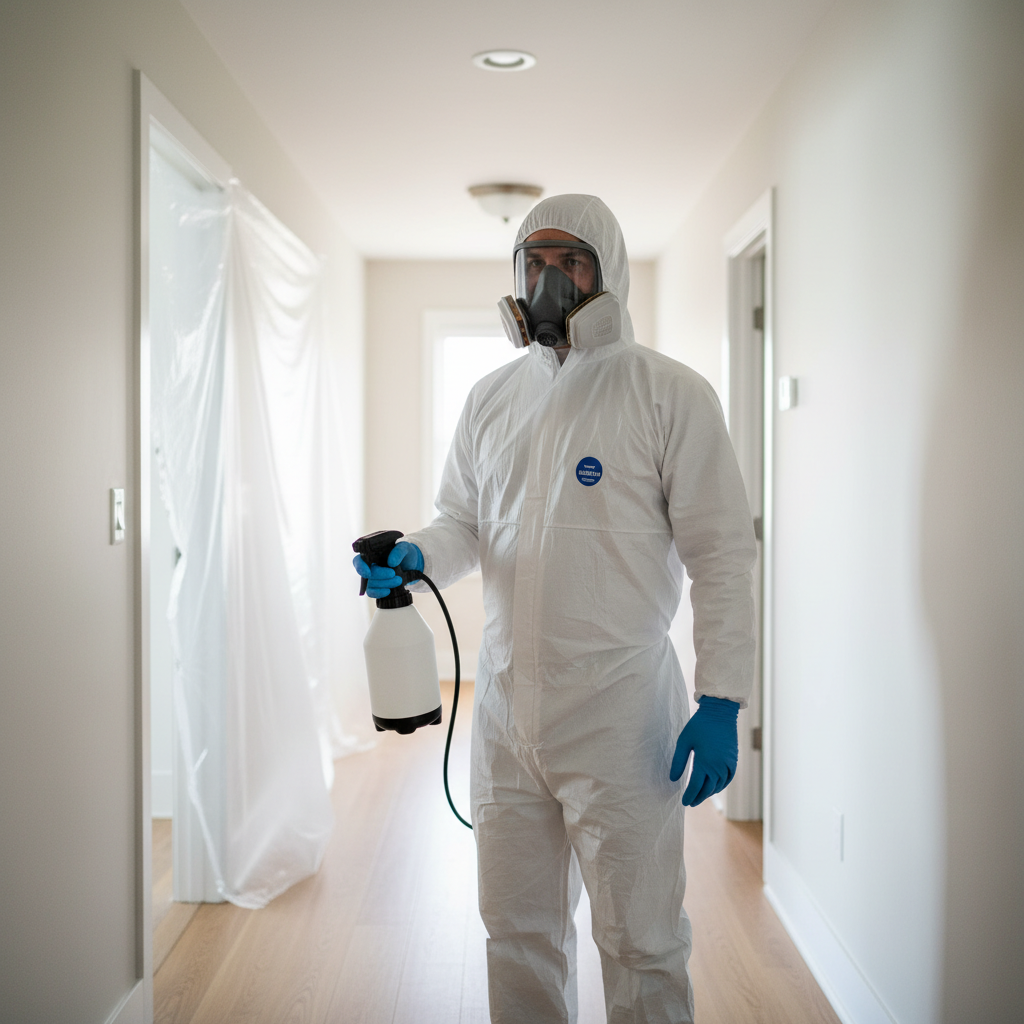
Unattended death cleanup is a specialized biohazard remediation process that should never be attempted without professional help. Decomposition begins within hours of death, producing dangerous pathogens, toxic gases, and biological contamination that penetrate flooring, walls, and structural materials. Cleanup costs typically range from $1,500 to $7,000 depending on how long the death went undiscovered, but can exceed $20,000 in severe cases. The property owner is usually responsible for arranging cleanup, though the deceased’s estate, homeowners insurance, or state victim compensation programs may cover costs. Get free quotes from certified professionals in your area.
What Is an Unattended Death?
An unattended death occurs when a person dies alone and their body is not discovered for an extended period—anywhere from several hours to weeks or even months. These deaths are most common among elderly individuals living alone, but can happen to anyone regardless of age or circumstance.
What makes unattended deaths uniquely challenging from a cleanup perspective is decomposition. The longer a body goes undiscovered, the more extensive the biological contamination becomes. Fluids, gases, and pathogens seep into carpeting, subfloors, drywall, furniture, and even structural framing, creating a biohazard scene that requires specialized remediation far beyond ordinary cleaning.
If you’re dealing with this situation right now, the most important thing to know is: do not attempt cleanup yourself. The health risks are serious, and improper cleaning can leave behind invisible contamination that causes long-term problems. Learn more about professional unattended death cleanup services.
How Quickly Decomposition Starts After Death
Decomposition begins almost immediately after death. Understanding the timeline helps explain why professional cleanup becomes more complex—and more expensive—with every day that passes.
According to the National Library of Medicine’s Evaluation of Postmortem Changes (StatPearls, NCBI), the body undergoes a predictable sequence of changes after death, though the speed varies significantly based on temperature, humidity, and other environmental factors.
| Stage | Timeline (Moderate Climate) | What Happens | Cleanup Impact |
|---|---|---|---|
| Fresh | 0–24 hours | Body cooling (algor mortis), blood pooling (livor mortis visible within 1 hour, fixed by 6–8 hours), muscle stiffening (rigor mortis complete by 12 hours) | Minimal—standard cleaning may suffice |
| Bloat | 24–72 hours | Bacteria produce methane, hydrogen sulfide, and ammonia gases; abdomen swells; skin discoloration; strong odor begins | Moderate—fluids begin leaching into surfaces |
| Active Decay | 3–10 days | Tissues liquefy; fluids purge from body openings; intense odor; insect activity | Significant—deep contamination of flooring, walls, furniture |
| Advanced Decay | 10–25 days | Most soft tissue consumed; body “caves in”; fluids have saturated surrounding materials extensively | Severe—structural materials likely affected; possible mold growth |
| Skeletonization | 25+ days to months | Only bone and dried tissue remain; extensive fluid staining and material degradation | Extreme—may require demolition of flooring, subfloor, and drywall |
⚠ Temperature accelerates everything. In warm environments (above 75°F), bloating can begin within 12–18 hours and active decay within 2 days. The National Library of Medicine notes that in tropical climates, visible decomposition signs appear within 18 hours versus 2–3 days in temperate regions. Summer deaths in homes without air conditioning decompose dramatically faster than winter deaths.
Health Hazards: Why You Cannot Clean This Yourself
Decomposition creates a concentrated cocktail of biological and chemical hazards. OSHA’s Bloodborne Pathogens Standard (29 CFR 1910.1030) classifies human blood and body fluids as potentially infectious materials—and decomposition fluids are among the most hazardous biological materials a person can encounter.
| Hazard Category | Specific Risks | Health Effects |
|---|---|---|
| Bloodborne Pathogens | HIV, Hepatitis B (HBV), Hepatitis C (HCV) | HBV can survive on surfaces for up to 7 days and remains infectious; potential for chronic liver disease, liver failure |
| Bacterial Infections | E. coli, Salmonella, C. difficile, Staphylococcus | Gastrointestinal illness, skin infections, sepsis in severe cases |
| Decomposition Gases | Hydrogen sulfide (H₂S), ammonia (NH₃), methane (CH₄), cadaverine, putrescine | H₂S causes olfactory paralysis at high concentrations and can cause respiratory arrest; methane creates asphyxiation risk in enclosed spaces |
| Mold & Fungal Growth | Aspergillus, Penicillium, Stachybotrys (black mold) | Respiratory irritation, allergic sensitization, chronic sinus and lung conditions |
| Bioaerosols | Airborne particles carrying bacteria and viral material | Respiratory infection, pneumonia risk; can circulate through HVAC systems and contaminate other rooms |
⚠ OSHA requires that anyone performing biohazard cleanup use full PPE including gloves, goggles, face shields, fluid-resistant gowns, and NIOSH-approved N95 respirators at minimum. Workers must also receive Bloodborne Pathogens training and have access to Hepatitis B vaccination. This is not household cleaning—it is regulated hazardous materials work.
Beyond the biological hazards, decomposition fluids soak into porous materials—carpet, carpet padding, hardwood, particleboard subfloor, drywall, and concrete—creating contamination that is invisible to the eye but can cause ongoing health problems and persistent odor if not fully remediated. Learn about professional odor removal after decomposition.
The Professional Cleanup Process: Step by Step
Professional unattended death cleanup follows a systematic process governed by OSHA regulations and state health department guidelines. Here is what to expect:
Step 1: Scene Assessment
A certified technician evaluates the affected area to determine the extent of contamination. This includes identifying all surfaces affected by decomposition fluids, measuring how far contamination has spread (into walls, subfloor, adjacent rooms), and checking HVAC systems for bioaerosol contamination. The assessment determines the scope of work and generates a detailed estimate.
Step 2: Containment and Ventilation
The affected area is sealed off with plastic sheeting to prevent cross-contamination. Negative air pressure systems are set up to control airflow and prevent contaminants from spreading to unaffected areas of the property. Industrial ventilation begins to address hazardous gas buildup.
Step 3: Removal of Contaminated Materials
All porous materials that absorbed decomposition fluids are removed and disposed of as regulated biohazardous waste. This typically includes carpet and padding, sections of subfloor, portions of drywall, affected furniture, mattresses, and personal items that cannot be decontaminated. Materials are placed in approved biohazard containers and transported to licensed disposal facilities.
Step 4: Deep Cleaning and Disinfection
All remaining surfaces are cleaned with hospital-grade disinfectants and antimicrobial agents that are effective against bloodborne pathogens. Non-porous surfaces like tile, metal, and sealed concrete are scrubbed and treated. Multiple rounds of disinfection are common in severe cases.
Step 5: Odor Neutralization
Decomposition odor is one of the most persistent challenges. Professional services use a combination of ozone generators, hydroxyl generators, thermal fogging, and enzyme-based treatments to neutralize odor at the molecular level—not just mask it. This step often takes multiple days. More about professional odor removal.
Step 6: Verification and Clearance Testing
The area is inspected to confirm all biohazards have been eliminated and odor has been neutralized. Some companies use ATP (adenosine triphosphate) testing to verify surface cleanliness. Detailed documentation is provided for insurance claims, property sales, and legal records.
ⓘ Timeline: A straightforward unattended death cleanup (discovered within 1–2 days) typically takes 3–5 hours. More severe cases with extensive decomposition can require 2–5 days of work, including time for odor treatment and structural drying.
Who Is Responsible for Paying for Cleanup?
One of the most stressful questions families and property owners face is: who pays? The answer depends on the property type, the relationship between the parties, and where the death occurred.
| Scenario | Primary Responsibility | Potential Coverage |
|---|---|---|
| Death in owned home | Deceased’s estate / next of kin | Homeowners insurance may cover under “property damage”; victim compensation if crime-related |
| Death in rental — tenant dies | Tenant’s estate bears initial responsibility | Landlord may recover costs from estate; landlord’s property insurance; renter’s insurance (if in effect) |
| Death in rental — estate is insolvent | Landlord / property owner | Landlord’s property insurance; may be a tax-deductible loss |
| Crime-related death (any property) | Property owner arranges; estate or offender liable | State victim compensation programs (most states); homeowners/landlord insurance |
| Death in hotel / commercial property | Property owner / business | Commercial property insurance; liability insurance |
| Death in vehicle | Vehicle owner / deceased’s estate | Comprehensive auto insurance (varies by policy) |
ⓘ Landlords: Act quickly regardless of who pays. Even when the tenant’s estate is technically responsible, landlords have a legal duty to prevent further property deterioration and protect other tenants. Arrange professional cleanup immediately and pursue cost recovery from the estate or insurance afterward. Delays increase costs dramatically and may expose you to liability from neighboring tenants.
For detailed guidance on navigating financial responsibility, see our resources on insurance coverage for biohazard cleanup and state victim compensation programs.
Cost Breakdown: What Unattended Death Cleanup Actually Costs
Costs vary widely based on how long the death went undiscovered, the size of the affected area, and what materials need to be removed. Here are realistic ranges based on industry data:
| Discovery Timeline | Typical Contamination Level | Estimated Cost Range |
|---|---|---|
| Within 24 hours | Minimal fluid release; surface contamination only | $1,500 – $3,000 |
| 1–3 days | Bloating stage; fluids beginning to leach into carpet/flooring | $2,500 – $5,000 |
| 3–7 days | Active decay; significant fluid penetration into subfloor and walls | $4,000 – $8,000 |
| 1–4 weeks | Advanced decay; structural contamination, mold growth likely | $6,000 – $15,000 |
| 1+ months | Extreme; may require demolition of flooring, subfloor, drywall sections | $10,000 – $25,000+ |
What drives costs higher:
- Summer heat or heated homes: Accelerates decomposition dramatically; a 3-day summer death can equal a 2-week winter death in severity
- Carpeted surfaces: Carpet and padding absorb fluids quickly and almost always must be removed; hardwood and tile are easier to remediate
- Multi-room contamination: If fluids have seeped through flooring into rooms below, or if bioaerosols have entered the HVAC system
- Hoarding conditions: Cluttered environments trap fluids in more materials and make access difficult
- Structural penetration: When fluids reach concrete slab or wooden joists, treatment becomes significantly more involved
Use our biohazard cleanup cost calculator to get a rough estimate for your situation, or request free quotes from certified companies in your area.
Insurance Coverage and Financial Assistance
Paying for unattended death cleanup out of pocket can be financially devastating. Here are the main avenues for coverage:
📝 Homeowners / Landlord Insurance
Many homeowners insurance policies cover biohazard cleanup under property damage provisions. Coverage varies significantly by carrier and policy type. Key steps:
- File a claim immediately—do not wait for cleanup to begin
- Document everything with photos before cleanup starts
- Ask your insurer specifically about “biohazard remediation” coverage
- Keep all invoices and documentation from the cleanup company
📝 Renters Insurance
Renters insurance may cover cleanup costs if the death was accidental or natural, though coverage is not guaranteed. The policy must be active at the time of death, and the insurer may deny claims related to the policyholder’s own death. Review the policy or contact the carrier directly.
📝 Crime Victim Compensation
If the death resulted from a crime (homicide, assault), every U.S. state operates a victim compensation program that may cover cleanup costs. For example, New York provides up to $2,500 for crime scene cleanup, and similar programs exist nationwide through the National Association of Crime Victim Compensation Boards (NACVCB). Find your state’s program.
📝 Estate Funds
If the deceased had assets, cleanup costs can be paid from the estate. This is a legitimate estate expense that takes priority over many other claims. Work with the estate’s executor or an attorney to arrange payment. For landlords, this is typically the route to cost recovery when the tenant’s estate is solvent.
For a complete breakdown, see our guide to insurance coverage for biohazard cleanup.
Frequently Asked Questions
Can I clean up an unattended death myself?
No. Beyond the emotional toll, the health risks are serious and well-documented. OSHA’s Bloodborne Pathogens Standard exists specifically because contact with human blood and body fluids can transmit life-threatening diseases including Hepatitis B and C. Decomposition also produces toxic gases like hydrogen sulfide, which can cause respiratory failure at high concentrations. Professional crews have the PPE, training, equipment, and waste disposal licenses required to do this work safely and completely.
How long does professional cleanup take?
Simple cases (death discovered within 24–48 hours, limited contamination) typically take 3–8 hours. Moderate cases with subfloor contamination take 1–2 days. Severe cases involving structural damage, extensive mold, or prolonged decomposition can take 3–5 days or more, including time for odor treatment and drying.
Does the smell ever fully go away?
Yes—with proper professional remediation. The key is removing all contaminated materials, not just cleaning surfaces. Decomposition odor molecules (cadaverine, putrescine, indole, skatole) bind to porous materials. If those materials are removed and hard surfaces are properly treated with ozone, hydroxyl generators, or enzyme treatments, the odor will be completely eliminated. If odor persists after a cleanup, it usually means contaminated material was missed. Learn more about decomposition odor removal.
Who do I call first when an unattended death is discovered?
Call 911 immediately. Law enforcement and the medical examiner/coroner must respond first to document the scene, determine cause of death, and release the body. Do not touch or clean anything until the scene is officially released. Once released, contact a certified biohazard cleanup company. Find certified companies near you.
Will my homeowners insurance cover this?
Many policies do, but it depends on your specific policy and carrier. Some policies cover biohazard cleanup under general property damage, while others may exclude it or have coverage limits. File a claim before cleanup begins, and ask your insurer specifically about biohazard remediation coverage. A professional cleanup company can help with the documentation your insurer requires. Read our full insurance coverage guide.
What if the death happened in my rental property?
As a landlord, you should arrange cleanup immediately to protect the property and other tenants, regardless of who is ultimately responsible for costs. The tenant’s estate is typically liable, but if the estate is insolvent or unresponsive, the cost falls to you as the property owner. Your landlord insurance policy may cover the remediation. You may also be able to recover costs from the estate through legal channels.
Is there a difference between “unattended death” and “undiscovered death”?
These terms are generally used interchangeably in the cleanup industry. Both refer to a death where the person was alone and not found for an extended period. Some professionals use “undiscovered death” to emphasize the discovery delay, while “unattended death” is the more common industry and legal term.
Find Certified Unattended Death Cleanup Companies Near You
Dealing with an unattended death is overwhelming. You don’t have to figure this out alone. Our directory connects you with certified, experienced biohazard cleanup professionals who handle everything—from contamination removal to insurance documentation—with compassion and discretion.