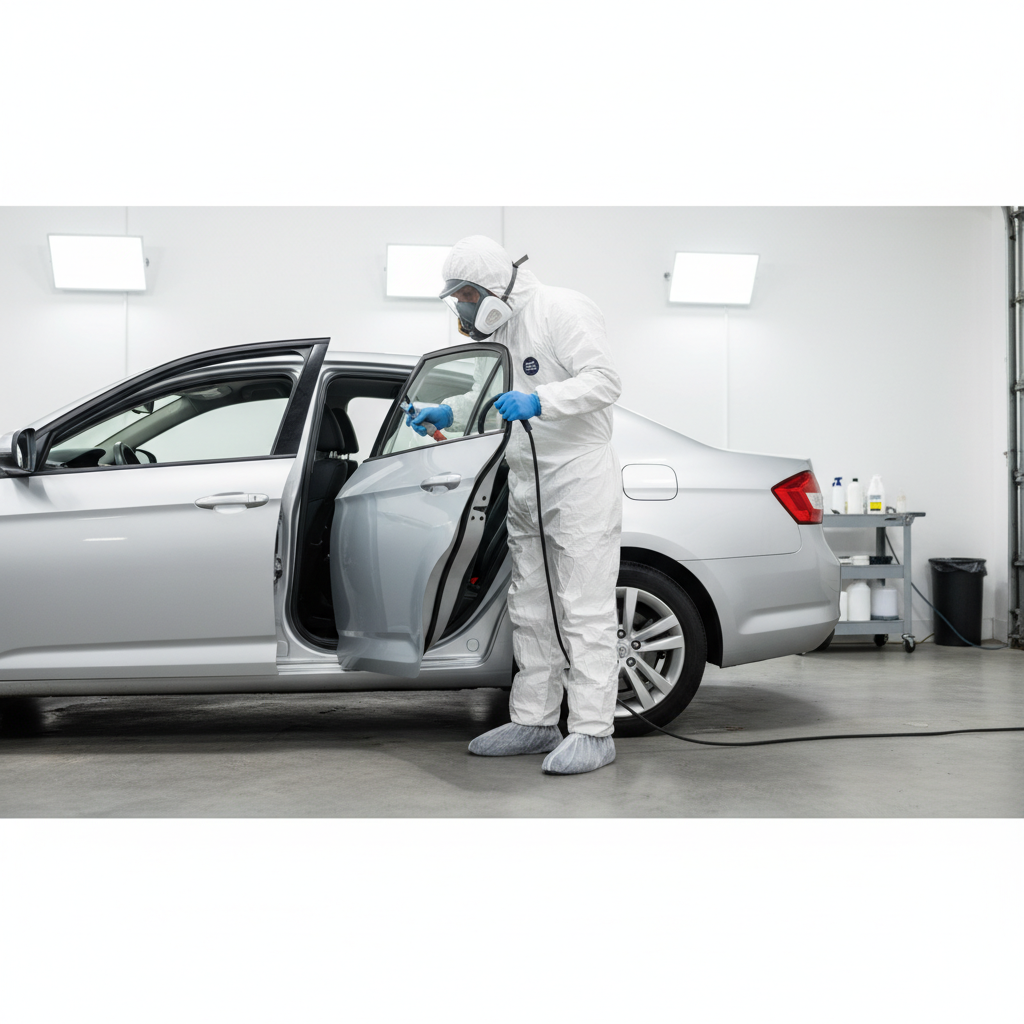
Yes, most vehicles can be saved after a biohazard event, but it depends on the severity of contamination, vehicle value, and how quickly cleanup begins. Professional vehicle biohazard cleanup typically costs $500 to $5,000+, and comprehensive auto insurance often covers it. When cleanup costs exceed 60-75% of the vehicle’s market value, insurers generally total the car instead.
What Counts as a Vehicle Biohazard?
A vehicle becomes a biohazard when its interior is contaminated with biological materials that pose health risks. This includes blood, bodily fluids, decomposition fluids, and other potentially infectious materials (OPIM) as defined by OSHA’s Bloodborne Pathogen Standard (29 CFR 1910.1030).
Common scenarios that require professional vehicle biohazard cleanup include:
- Death in a vehicle (suicide, natural death, unattended death, or homicide
- Serious accident injuries) significant bleeding from trauma or medical emergencies
- Decomposition, when a body goes undiscovered in a vehicle for days or longer
- Medical emergencies, hemorrhaging, dialysis accidents, or other bodily fluid releases
- Drug contamination: fentanyl, meth, or needle/sharps left in vehicles
Never attempt to clean a biohazard vehicle yourself. Bloodborne pathogens like HIV, Hepatitis B, and Hepatitis C can survive on surfaces for days to weeks. Hepatitis B can remain infectious on dried surfaces for up to 7 days. Without proper PPE, hospital-grade disinfectants, and training, you risk serious illness.
The Professional Cleanup Process
Professional biohazard remediation for vehicles follows a structured protocol similar to property cleanup but adapted for the confined, complex environment of a vehicle interior.
Technicians conduct a thorough evaluation of the vehicle, identifying all contamination sources and affected materials. This includes checking beneath seats, inside door panels, under carpet, and within the HVAC system. Photos are taken for insurance documentation.
Technicians don full PPE including Tyvek suits, N95 or P100 respirators, double nitrile gloves, and eye protection. The vehicle is typically moved to a controlled environment: a ventilated garage bay or enclosed work area.
Porous materials that have absorbed biohazard fluids are cut out and removed. This often includes seat cushions, carpet, carpet padding, headliner fabric, and door panel inserts. All removed materials are double-bagged in clearly labeled biohazard waste bags for regulated disposal.
All hard surfaces are cleaned with hospital-grade, EPA-registered disinfectants effective against bloodborne pathogens. This includes the metal seat frames, dashboard, console, seatbelt mechanisms, and any exposed structural components. Multiple rounds of cleaning are standard.
Professional odor removal uses thermal fogging, ozone generators, or hydroxyl generators to neutralize odor molecules that have permeated the vehicle’s interior. The HVAC system is also treated, as odor can become trapped in the cabin air filter, evaporator coil, and ductwork.
ATP (adenosine triphosphate), testing is used to verify that surfaces are free of organic contamination. The company provides a certificate of decontamination documenting the work performed, which is important for insurance, resale, and peace of mind.
Cost Ranges by Scenario
Vehicle biohazard cleanup costs vary dramatically based on the type and extent of contamination. Use our cost calculator for a personalized estimate, or refer to the ranges below.
| Scenario | Typical Cost Range | What’s Involved | Timeline |
|---|---|---|---|
| Minor blood spill (small area, surface-level) | $500-$1,500 | Surface cleaning, disinfection, spot odor treatment | 2-4 hours |
| Moderate blood/fluid contamination (seats, carpet) | $1,500-$3,500 | Material removal, deep disinfection, component replacement, odor removal | 4-8 hours |
| Death: discovered quickly (no decomposition) | $2,000-$4,500 | Full interior remediation, extensive material replacement, HVAC treatment | 1-2 days |
| Death with decomposition (undiscovered 2+ days) | $3,500-$6,000+ | Full teardown, structural cleaning, insect remediation, multi-stage odor treatment | 2-4 days |
| Severe decomposition (weeks undiscovered) | $5,000-$10,000+ | Complete interior strip-out, possible total loss determination | 3-5 days |
| Drug contamination (fentanyl/meth) | $2,000-$8,000 | Chemical testing, surface decontamination, HVAC cleaning, clearance testing | 1-3 days |
Biohazard waste disposal adds $2-$20 per pound to total costs. Emergency or after-hours response can add a $500-$1,000 surcharge. Most companies require an in-person assessment before providing a firm quote, photographs rarely capture the full scope of contamination.
Auto Insurance Coverage for Biohazard Cleanup
One of the most common questions we receive is whether auto insurance covers biohazard cleanup. The answer depends on your policy type, the cause of contamination, and your insurer.
| Policy Type | Coverage Likelihood | How It Works |
|---|---|---|
| Comprehensive | Most Likely Covered | Covers non-collision damage including vandalism, theft aftermath, and biohazard events. Most comprehensive policies include biohazard cleanup for deaths, medical emergencies, and crime-related contamination. |
| Collision | Sometimes Covered | If biohazard contamination resulted directly from a collision (e.g., severe injury in a car accident), cleanup may fall under collision coverage as part of the overall repair claim. |
| Liability Only | Not Covered | Liability-only policies cover damage you cause to others. They do not cover damage to your own vehicle, including biohazard contamination. |
| Commercial / Fleet | Usually Covered | Most commercial auto policies include biohazard remediation. Fleet operators may also have standalone environmental liability riders that specifically cover decontamination. |
| Gap Insurance | Indirect Coverage | If the vehicle is totaled due to biohazard and you owe more than its value, gap insurance covers the difference between what your insurer pays and what you owe on the loan. |
Document everything before cleanup begins. Take photos and video of the contamination. Contact your insurer immediately: some policies require pre-approval before remediation work starts. Ask the cleanup company to provide a detailed written estimate and certificate of decontamination for your claim file. Many professional biohazard companies will work directly with your insurance adjuster to streamline the claims process.
Restore vs. Total Loss: Decision Matrix
Insurance companies use a straightforward calculation: if cleanup plus component replacement costs exceed a certain percentage of the vehicle’s actual cash value (ACV), they’ll total it. Most states set this threshold between 60% and 80% of ACV, though a few go as high as 100%.
| Factor | Favors Restoration | Favors Total Loss |
|---|---|---|
| Vehicle Value | High-value, luxury, or specialty vehicle (ACV $25,000+) | Older vehicle with low market value (ACV under $5,000) |
| Contamination Extent | Surface-level or limited to one area (e.g., driver seat only) | Fluids have penetrated subfloor, trunk, HVAC system, multiple zones |
| Time Since Incident | Discovered and addressed within 24-48 hours | Decomposition over days/weeks; odor has permeated every surface |
| Cleanup-to-Value Ratio | Cleanup cost is under 40% of vehicle ACV | Cleanup cost exceeds 60-75% of vehicle ACV |
| Component Damage | Seats, carpet, and headliner can be replaced cost-effectively | Contamination reached wiring harnesses, ECU, or structural cavities |
| Odor Persistence | Odor eliminated after standard treatment | Odor persists after multiple treatments; trapped in insulation/foam |
| Title Impact | Vehicle can retain a clean title after remediation | State requires biohazard or salvage title branding, reducing resale 20-60% |
If your insurer declares a total loss but you want to keep the vehicle, you may be able to negotiate a “retained salvage” payout. The insurer pays you the ACV minus the salvage value, and you keep the car. You’ll then pay for cleanup out of pocket and receive a salvage or rebuilt title. This can make sense for specialty or sentimental vehicles worth significantly more than their book value.
Vehicle Parts Most Commonly Replaced
Unlike property remediation where materials like drywall and carpet are standard, vehicle components vary by make, model, and year. Here are the parts most frequently removed and replaced during biohazard cleanup:
| Component | When Replacement Is Needed | Typical Replacement Cost |
|---|---|---|
| Seat cushion & foam | Fluids have soaked through upholstery into foam (nearly always) | $200-$800 per seat |
| Carpet & padding | Blood or fluids reached carpet padding or subfloor | $300-$1,200 |
| Headliner | Splatter contamination (common in gunshot incidents) | $200-$600 |
| Door panel inserts | Porous fabric or foam absorbed contamination | $100-$400 per panel |
| Seatbelts | Webbing has absorbed blood (cannot be fully decontaminated) | $75-$250 per belt |
| Cabin air filter | Always replaced, traps odor and biological particles | $15-$50 |
| Center console / trim | Fluids entered seams or crevices in porous materials | $150-$500 |
| Trunk liner / cargo area | Contamination reached rear cargo area | $100-$400 |
For luxury vehicles and newer models, OEM replacement parts can be significantly more expensive. Aftermarket parts are often available at 30-50% less, and many remediation companies can source and install them as part of the cleanup contract.
Disclosure Requirements & Title Branding
If you plan to sell a vehicle that has undergone biohazard remediation, you need to understand your legal obligations. Disclosure laws vary by state, but the consequences of non-disclosure are serious everywhere.
Title Branding
Some states require that vehicles involved in biohazard events receive a branded title. Common brand categories include:
- Biohazard, A few states (including Colorado and Washington) have specific biohazard title brands
- Salvage, If the insurer totals the vehicle, it typically receives a salvage title
- Rebuilt/Reconstructed, After a salvage vehicle is repaired and passes inspection
- Contaminated Property, Washington state uses this specific designation for vehicles exposed to hazardous substances including biohazards
Resale Value Impact
A branded title significantly impacts resale value. According to industry data:
- Salvage titles reduce value by 20-40% compared to identical clean-title vehicles
- Rebuilt titles typically reduce value by 20-35%
- Some buyers at salvage auctions purchase biohazard vehicles at 40-60% below market value, have them professionally remediated, and resell at a profit
In most states, sellers are legally required to disclose a vehicle’s biohazard history to buyers. Failure to disclose can result in the buyer unwinding the sale, suing for damages, and in some states, criminal misdemeanor charges. If your vehicle has been professionally remediated and has a clean title, keep the certificate of decontamination and remediation records: they provide proof that the vehicle is safe and demonstrate good faith if questions arise later.
Fleet Vehicles & OSHA Requirements
Companies that operate fleet vehicles (delivery vans, ambulances, taxis, rideshare vehicles, law enforcement cars, or any commercial vehicle) have additional obligations when a biohazard event occurs.
OSHA’s Bloodborne Pathogen Standard (29 CFR 1910.1030)
OSHA requires employers to protect workers from reasonably anticipated exposure to blood and other potentially infectious materials. For fleet operators, this means:
Fleet Compliance Checklist
Asking employees to clean up blood or bodily fluids without proper BBP training and PPE is an OSHA violation. Penalties for serious violations can reach $16,131 per violation (2025 rates), and willful or repeated violations can reach $161,323 per violation. A biohazard event in a fleet vehicle is not a janitorial task. It requires certified professional remediation.
Frequently Asked Questions
In most cases, yes. If the death was discovered quickly (within 24-48 hours), and the vehicle has reasonable market value, professional remediation can fully restore the interior. The key factors are how deeply fluids penetrated porous materials and whether decomposition occurred. A professional assessment will determine the scope of work needed and whether restoration is cost-effective compared to the vehicle’s value.
Comprehensive auto insurance policies often cover biohazard cleanup as a non-collision covered event. Coverage varies by insurer and policy, so contact your provider immediately after the incident. Collision coverage may also apply if the contamination resulted from an accident. Liability-only policies do not cover damage to your own vehicle. Many professional biohazard cleanup companies work directly with insurance adjusters to handle claims.
Insurance companies typically total a vehicle when cleanup and repair costs exceed 60-75% of the vehicle’s actual cash value (the exact threshold varies by state). Other indicators of a likely total loss include: severe decomposition that has reached the vehicle’s wiring, insulation, or structural cavities; persistent odor after multiple professional treatments; or contamination of the HVAC system that requires full replacement.
Timeline depends on severity. A minor blood spill can be remediated in 2-4 hours. Moderate contamination involving seat and carpet removal takes 4-8 hours. Deaths without decomposition typically require 1-2 days, while decomposition cases can take 3-5 days including multi-stage odor treatment. Drying time after treatment may add another day before the vehicle is ready.
This is strongly discouraged. Bloodborne pathogens including HIV, Hepatitis B, and Hepatitis C can be present in blood and bodily fluids. Hepatitis B can survive on dried surfaces for up to 7 days. Consumer cleaning products are not EPA-registered for pathogen kill, and you likely don’t have the PPE, training, or regulated waste disposal access needed for safe decontamination. Professional cleanup also provides documentation for insurance and future resale.
Disclosure requirements vary by state. If your vehicle received a branded title (salvage, biohazard, or contaminated property), that branding is part of the title record and must be disclosed. Even without a branded title, most states require sellers to disclose known material defects. Failing to disclose a biohazard history could expose you to lawsuits and, in some states, criminal charges. Keep your certificate of decontamination as proof the vehicle was properly remediated.
If the vehicle was declared a total loss by an insurer or received a branded title, it will appear on vehicle history reports. If the vehicle was remediated without an insurance total loss and retained its clean title, the event may not appear in public databases. However, auction records (Copart, IAAI) do track biohazard designations.
Auto detailing is cosmetic cleaning: it addresses dirt, stains, and odors using consumer-grade products. Biohazard remediation is health-and-safety decontamination using EPA-registered, hospital-grade disinfectants, performed by trained technicians in full PPE, with regulated waste disposal. A detailer can make a car look clean; only a certified biohazard professional can make it safe. ATP testing after remediation verifies that biological contamination has been eliminated.
Need Vehicle Biohazard Cleanup?
Connect with certified biohazard cleanup professionals in your area who specialize in vehicle decontamination. All companies in our directory are verified, insured, and equipped for vehicle remediation.
Most companies offer 24/7 emergency response and work directly with your insurance company.