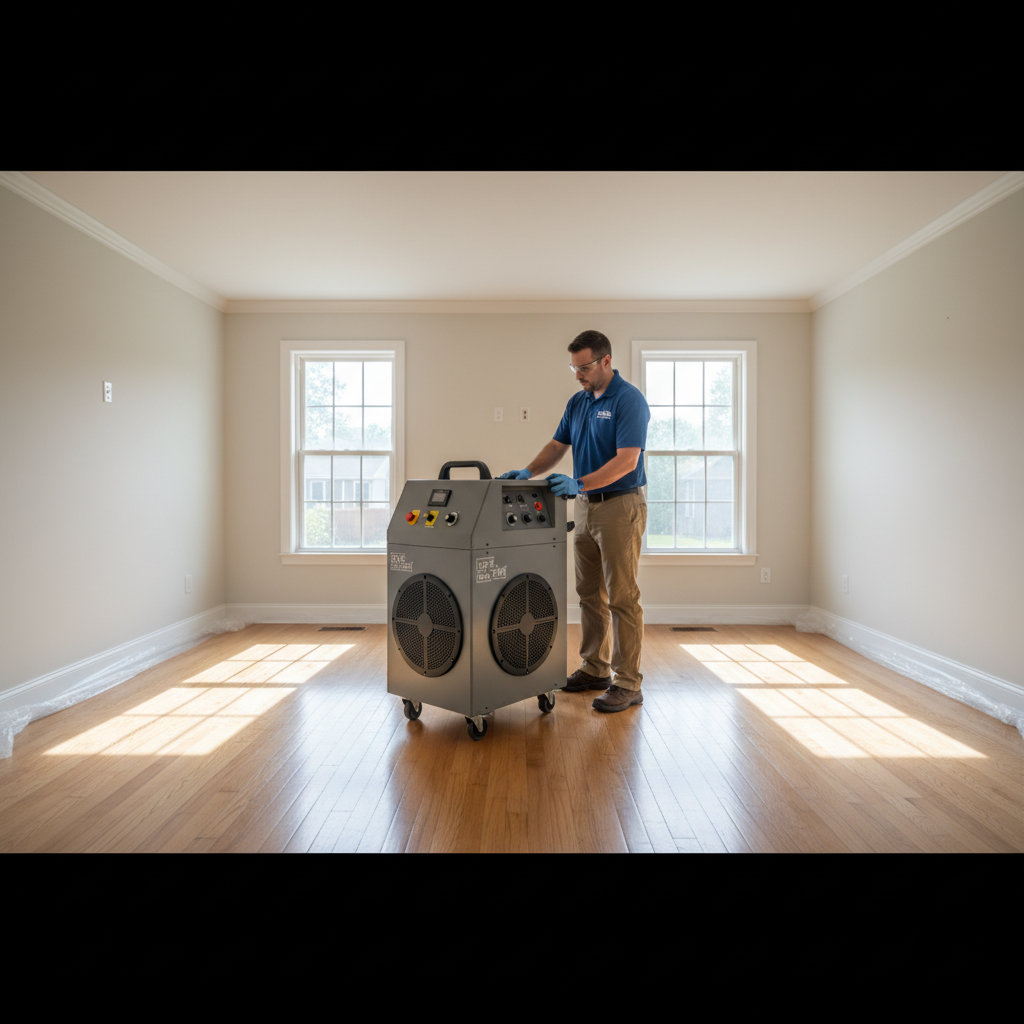
Death odor is caused by over 800 volatile organic compounds released during decomposition, including putrescine, cadaverine, and hydrogen sulfide. These molecules penetrate deep into carpet, subfloor, drywall, and concrete—making surface cleaning ineffective. Professional removal using ozone generators, hydroxyl generators, thermal fogging, or enzyme treatments can fully eliminate the odor, typically costing $500 to $6,000+ depending on severity and square footage. DIY methods like baking soda and vinegar only mask the smell temporarily. Untreated, decomposition odor can persist indefinitely in porous materials. Get free quotes from certified odor removal professionals.
The Chemistry Behind Death Odor
Death odor is not a single smell—it is a complex mixture of over 800 different chemical compounds produced as bacteria break down the body’s proteins, fats, and carbohydrates. Research published in Frontiers in Microbiology (2023) identified the key chemical families responsible for the characteristic smell of decomposition.
The two most well-known compounds are putrescine (1,4-butanediamine) and cadaverine (1,5-pentanediamine)—nitrogen-containing molecules produced by the bacterial breakdown of the amino acids ornithine and lysine. These are the compounds primarily responsible for the distinctive “smell of death” that most people recognize immediately.
But putrescine and cadaverine are just the beginning. Decomposition also produces:
- Polysulphides (dimethyl disulfide, dimethyl trisulfide)—responsible for the sulfurous, rotten-egg component of the smell and identified as potential biomarkers specific to human decomposition
- Hydrogen sulfide (H₂S)—the “rotten egg” gas, detectable at concentrations as low as 0.5 ppb
- Ammonia (NH₃)—a sharp, pungent gas produced from protein breakdown
- Indole and skatole—fecal-smelling compounds from the breakdown of the amino acid tryptophan
- Volatile fatty acids (butyric acid, propionic acid)—rancid, vomit-like odors
- Methane (CH₄)—odorless itself, but indicates active bacterial decomposition
What makes death odor so persistent is that these compounds are volatile organic compounds (VOCs) that exist as gas-phase molecules capable of penetrating deep into porous materials. According to forensic research, the VOC profile changes over time as decomposition progresses through different stages, but the compounds that cause the most persistent odor—putrescine, cadaverine, and the polysulphides—bind strongly to fabrics, wood, concrete, and drywall at the molecular level.
ⓘ Why the smell seems to “come back”: Temperature and humidity fluctuations cause VOCs trapped in porous materials to off-gas at different rates. On warm, humid days, materials release more trapped compounds, which is why a house may seem odor-free one day and smell again the next. This is a sign that contaminated material has not been fully removed or treated.
Health Risks of Decomposition Gases
Decomposition odor is not just unpleasant—several of the gases produced during decomposition pose serious health risks, particularly in enclosed indoor spaces where concentrations can build up rapidly.
| Gas | OSHA PEL (8-hr TWA) | Odor Threshold | IDLH (Immediately Dangerous) | Health Effects |
|---|---|---|---|---|
| Hydrogen Sulfide (H₂S) | 20 ppm (ceiling: 50 ppm for 10 min) | 0.5 ppb | 100 ppm | Eye/respiratory irritation; olfactory paralysis at 100+ ppm (you stop smelling it); respiratory arrest at 500+ ppm; one of the leading causes of workplace gas inhalation deaths |
| Ammonia (NH₃) | 50 ppm | 5–50 ppm | 300 ppm | Corrosive to skin, eyes, and lungs; causes chemical burns to respiratory tract; pulmonary edema at high concentrations |
| Methane (CH₄) | 1,000 ppm (as simple asphyxiant) | Odorless | N/A (displaces oxygen) | Asphyxiation risk in enclosed spaces; explosive at 5–15% concentration in air |
| Volatile Organic Compounds (mixed) | Varies by compound | Varies | Varies | Eye/throat irritation, headaches, nausea, dizziness; long-term neurological effects from chronic exposure |
⚠ Critical danger with hydrogen sulfide: OSHA data shows H₂S caused 46 worker deaths between 2011 and 2017 in the United States alone. At concentrations above 100 ppm, H₂S paralyzes the olfactory nerve—meaning you lose the ability to smell it precisely when it becomes most dangerous. The ACGIH recommends a much stricter threshold limit of just 1 ppm (8-hr TWA) and 5 ppm short-term exposure limit. Never enter a space with strong decomposition odor without proper respiratory protection.
People with asthma or respiratory conditions are especially vulnerable to decomposition gases and may experience symptoms at concentrations well below OSHA limits. If you can smell decomposition in a home, do not occupy the space until it has been professionally remediated. Find professional odor removal services.
How Long Does Death Odor Last If Untreated?
Without professional intervention, decomposition odor can persist for months to years—and in severe cases, indefinitely. The duration depends on the source, environmental conditions, and how deeply the odor compounds have penetrated building materials.
| Source | Odor Duration (Untreated) | Key Factors |
|---|---|---|
| Small animal (mouse, rat) | 1–3 weeks | Small body mass means less contamination; odor often resolves as remains desiccate |
| Medium animal (cat, possum, raccoon) | 3–8 weeks | More fluid release; greater penetration if animal died in wall void or under flooring |
| Human — discovered within 48 hours | 2–6 weeks with ventilation | Minimal fluid release into materials; odor may dissipate with thorough cleaning and air exchange |
| Human — discovered 3–7 days | 2–6 months | Significant fluid penetration into flooring; odor embedded in porous materials |
| Human — discovered 1–4 weeks | 6–12+ months | Deep structural contamination; fluids in subfloor, concrete, and wall cavities |
| Human — discovered 1+ months | Indefinite without remediation | Extensive material saturation; odor reactivates with temperature and humidity changes |
The critical variable is how deeply decomposition fluids have penetrated building materials. Surface contamination on non-porous materials (tile, sealed concrete, metal) can often be cleaned effectively. But once fluids soak into carpet padding, particleboard subfloor, unsealed concrete, or drywall, the odor-causing compounds become trapped within the material itself and will continue off-gassing for months or years.
⚠ The odor will always come back if contaminated materials are not removed or properly treated. Air fresheners, scented candles, and surface cleaners do not reach the VOCs embedded deep within porous materials. The only permanent solution is to remove the contaminated material or use professional-grade oxidizing treatments that break down the odor molecules at the chemical level.
Materials That Absorb Odor: When to Replace vs. Treat
Not every material in a home affected by decomposition odor needs to be torn out. The decision depends on the material’s porosity, how long it was exposed to decomposition fluids, and whether professional treatment can reach the contamination.
| Material | Porosity | Odor Absorption | Recommendation |
|---|---|---|---|
| Carpet & carpet padding | Highly porous | Extreme—absorbs fluids rapidly and completely | Replace always. Carpet padding is the worst offender and cannot be decontaminated. Remove carpet, padding, and tack strips in the affected area. |
| Particleboard / OSB subfloor | Highly porous | Severe—swells and disintegrates when saturated | Replace any sections that absorbed fluids. Particleboard cannot be sealed effectively once saturated. |
| Plywood subfloor | Moderately porous | High—but may not penetrate all the way through | Treat first; replace if odor persists after enzyme treatment and sealing with shellac-based primer (e.g., Zinsser B-I-N). |
| Hardwood flooring | Moderately porous | Moderate—finish provides some protection | Treat with enzyme cleaner, sand if needed, seal with odor-blocking primer. Replace only if fluids penetrated through to subfloor. |
| Drywall (gypsum board) | Highly porous | Severe—wicks fluids upward from floor contact | Replace any sections that show staining or absorbed fluids. Cut 12–24 inches above the highest visible contamination line. |
| Concrete (unsealed) | Porous | High—fluids soak into surface layer | Treat with enzyme cleaner, then seal with penetrating concrete sealer or water-based acrylic coating. Rarely needs replacement. |
| Concrete (sealed / epoxy-coated) | Low porosity | Low—fluids sit on surface | Clean and disinfect. Existing seal usually prevents penetration. Re-seal after cleaning. |
| Tile & grout | Tile: non-porous; Grout: porous | Grout absorbs odor; tile does not | Treat grout with enzyme cleaner and re-seal. Replace grout only in severe cases. |
| Upholstered furniture / mattresses | Highly porous | Extreme | Replace always. Cannot be reliably decontaminated or deodorized. |
| Painted walls (latex paint) | Low to moderate | Surface odor; rarely deep penetration | Treat with ozone or hydroxyl, then repaint with odor-blocking primer if needed. |
| HVAC ductwork | Non-porous (metal) | Bioaerosols and VOCs circulate and deposit | Professional duct cleaning required. Replace filters. Treat with ozone or hydroxyl while system runs. |
ⓘ The “12-inch rule” for drywall: Decomposition fluids on floors will wick upward into adjacent drywall through capillary action. Professional remediators typically cut and remove drywall at least 12 to 24 inches above the highest visible contamination line to ensure all affected material is eliminated.
Professional Odor Removal Methods Compared
Professional odor removal services use four primary technologies, often in combination, to eliminate decomposition odor. Each has distinct advantages and limitations.
| Method | How It Works | Treatment Time | Best For | Limitations |
|---|---|---|---|---|
| Ozone Generator | Produces ozone (O₃) that oxidizes and destroys odor molecules. Uses ~1,000 mg/hr per 1,000 cubic feet. Professional units output 3,600–9,000+ mg/hr. | 12–48 hours per treatment cycle; space must be unoccupied | Severe odors; penetrates porous surfaces effectively; fastest results of any method | Toxic to humans, pets, and plants—space must be fully vacated. Can damage rubber, certain fabrics, and electronics at high concentrations. Requires 2–4 hours ventilation before re-entry (below 0.1 ppm per EPA guidance). |
| Hydroxyl Generator | Produces hydroxyl radicals (OH) via UV light that react with and neutralize over 5,000 different compounds. Generates ~2 million radicals per cm³. | 24–72 hours continuous operation; covers 1,000–1,500 sq ft per unit | Occupied spaces; safe for people, pets, plants, and sensitive materials; no chemical residue | Takes 2–3x longer than ozone. Multiple units needed for larger spaces. Higher equipment cost. Less effective on deeply embedded odors without supplemental methods. |
| Thermal Fogging | Heats deodorizing solution into ultra-fine fog particles (same size as odor molecules) that penetrate cracks, crevices, and porous surfaces | 1–4 hours application; 24 hours for fog to settle and bond | Reaching odor in wall cavities, crevices, and areas difficult to access by other methods; works as a complement to ozone or hydroxyl | Temporary evacuation required during application. Does not eliminate the source—treats residual odor only. Leaves light residue on surfaces. Must be used after source removal, not instead of it. |
| Enzyme / Bio-Enzymatic Treatment | Live bacterial cultures and enzymes break down organic matter (proteins, fats) at the molecular level, consuming the odor source rather than masking it | 24–72 hours for initial treatment; may need 2–3 applications over 1–2 weeks | Direct application to contaminated surfaces (subfloor, concrete, wood); eliminates source material that other methods cannot reach | Requires direct contact with contaminated surface. Slower acting. Temperature-dependent (works best 60–100°F). Not effective for airborne odor—only treats surfaces. |
Most effective approach: Professional remediators rarely use a single method. The standard protocol for decomposition odor combines enzyme treatment on contaminated surfaces (to eliminate the source) with ozone or hydroxyl treatment (to neutralize airborne and embedded VOCs) and sometimes thermal fogging for hard-to-reach areas. This multi-method approach addresses odor at every level—source, surface, and airborne.
The Professional Odor Removal Process
When you hire a professional odor removal service for decomposition odor, here is what the process typically involves:
Step 1: Source Identification and Assessment
Technicians locate and assess all contamination sources. If biohazard cleanup has not already been performed, it must happen first—odor removal cannot succeed while the contamination source remains. The assessment identifies all affected materials, measures contamination depth, and determines which materials must be removed versus treated.
Step 2: Contaminated Material Removal
All porous materials that have absorbed decomposition fluids are removed: carpet, padding, affected sections of subfloor, contaminated drywall, and unsalvageable furniture. These materials are disposed of as biohazardous waste. This is the single most important step—no odor treatment technology can overcome a contamination source that remains in place.
Step 3: Enzyme Treatment of Hard Surfaces
Bio-enzymatic cleaners are applied directly to remaining hard surfaces that absorbed fluids—concrete, plywood subfloor, wood framing, and tile grout. The enzymes break down residual organic matter at the molecular level. Multiple applications over several days may be needed for deep contamination.
Step 4: Sealing Treated Surfaces
After enzyme treatment, porous hard surfaces are sealed with shellac-based or odor-blocking primers (such as Zinsser B-I-N or Kilz Original) to encapsulate any remaining VOCs and prevent future off-gassing. Concrete may be treated with penetrating sealers or water-based acrylic coatings.
Step 5: Air Treatment (Ozone or Hydroxyl)
The space is treated with ozone generators (if unoccupied) or hydroxyl generators (if occupied or containing sensitive materials) to neutralize airborne VOCs and odor molecules embedded in walls, ceilings, and surfaces that were not directly contaminated by fluids. HVAC systems are run during treatment to circulate treated air through ductwork.
Step 6: Thermal Fogging (If Needed)
For odor that has penetrated wall cavities, behind cabinetry, or into other inaccessible areas, thermal fogging delivers deodorizing agents as ultra-fine particles that reach everywhere air can reach.
Step 7: Verification and Follow-Up
The space is evaluated after treatment to confirm odor elimination. This may include ATP testing on surfaces and professional assessment over several days to ensure the odor does not return with temperature or humidity changes. Follow-up treatments are scheduled if needed.
ⓘ Timeline: The full process typically takes 3 to 7 days from start to finish, including enzyme treatment cure time and air treatment. Severe cases involving structural contamination or hoarding conditions may take longer.
DIY Methods: What Works and What Doesn’t
If professional help is not immediately available, or if you are dealing with minor odor from a small animal, some DIY approaches can provide temporary relief. But it is critical to understand what these methods can and cannot do.
| DIY Method | Effectiveness | Verdict |
|---|---|---|
| Activated charcoal | Absorbs airborne odor molecules effectively through adsorption. Research confirms it is significantly more effective than baking soda. | Helpful—place bowls of activated charcoal near affected areas to reduce airborne odor. Does not address source contamination. Replace every 2–3 days. |
| Ventilation (fans + open windows) | Dilutes airborne VOC concentrations. Effective for mild cases. | Helpful—cross-ventilation with fans reduces airborne odor. Does not eliminate odor trapped in materials. Essential first step regardless. |
| HEPA air purifier with carbon filter | Carbon filter adsorbs VOCs; HEPA captures bioaerosol particles. | Helpful—reduces airborne contamination and odor. Must use a model with activated carbon (not HEPA alone). Not a substitute for source removal. |
| Enzyme cleaners (store-bought) | Consumer enzyme cleaners (Nature’s Miracle, Rocco & Roxie, etc.) can break down surface-level organic contamination. | Somewhat helpful—effective for surface treatment on hard floors. Not strong enough for deep subfloor or concrete penetration. Professional-grade products are significantly more concentrated. |
| Baking soda | Mild odor absorber. Research shows it is not significantly effective at reducing strong malodor on its own. | Minimally helpful—may slightly reduce mild surface odors. Completely ineffective against decomposition-level contamination. |
| White vinegar | Neutralizes some alkaline odor molecules but does not eliminate the source. Effect is short-lived. | Minimally helpful—provides temporary masking. Does not penetrate materials or break down VOCs. You are adding an odor to cover an odor. |
| Bleach | Strong disinfectant but poor deodorizer. Does not break down odor-causing organic compounds effectively. | Not recommended—creates hazardous chlorine gas if mixed with ammonia (which is present in decomposition). Can damage materials. Disinfects surfaces but does not address embedded odor. |
| Air fresheners / scented candles / Febreze | Masks odor temporarily by adding competing scent molecules. Zero effect on the source. | Ineffective—odor returns immediately when product dissipates. Creates a nauseating combination of decomposition + fragrance. |
| Ozone generator (consumer-grade) | Consumer units produce far less ozone than professional equipment. May reduce mild odors in small spaces. | Use with extreme caution—ozone is toxic. Must vacate space during operation. Consumer units lack the output for severe odors. Risk of damage to lungs, rubber, and electronics. Professional units produce 3,600–9,000+ mg/hr vs. 200–600 mg/hr for consumer models. |
⚠ Can you remove death smell yourself? For a small dead animal (mouse, bird) found and removed quickly, DIY methods like activated charcoal and ventilation can work. For any human decomposition odor, professional help is essential. The health risks from H₂S and other gases are serious, the contamination runs deeper than you can reach with consumer products, and improper cleaning can spread contamination or leave invisible biohazards behind. Get free quotes from certified professionals.
Cost Ranges for Professional Odor Removal
Odor removal costs depend on the severity of contamination, the square footage affected, and what materials need to be removed. Odor removal is often a separate line item from biohazard cleanup, which covers the removal of biological contamination. Some companies bundle both services.
| Severity | Typical Scenario | Methods Used | Cost Range |
|---|---|---|---|
| Mild | Small animal in wall; human death discovered within 24 hours; single room affected | Enzyme treatment + ozone or hydroxyl (1–2 days) | $500 – $1,500 |
| Moderate | Death discovered 2–7 days; 1–2 rooms affected; carpet and padding contaminated | Material removal + enzyme treatment + ozone + sealing (3–5 days) | $1,500 – $3,500 |
| Severe | Death discovered 1–4 weeks; multiple rooms; subfloor and drywall contamination; HVAC affected | Extensive material removal + enzyme + ozone + thermal fogging + sealing (5–7 days) | $3,500 – $6,000 |
| Extreme | Death discovered 1+ months; structural contamination; hoarding conditions; multi-level spread | Demolition of flooring/subfloor/drywall + full remediation protocol (1–2+ weeks) | $6,000 – $15,000+ |
Additional cost factors:
- Biohazard cleanup (if not already done): $1,500–$7,000+ as a separate service for removing decomposition fluids and contaminated materials. Learn about unattended death cleanup costs.
- HVAC duct cleaning: $300–$800 if decomposition gases entered the air handling system
- Subfloor replacement: $3–$10 per square foot for materials and labor
- Drywall replacement: $2–$6 per square foot installed
ⓘ Insurance coverage: Homeowners insurance covers most biohazard and odor remediation when the cause is accidental or natural (not the result of neglect). File a claim before cleanup begins and document everything with photos. Most professional companies work directly with insurance adjusters and can help with documentation. Use our cost calculator for an estimate.
Frequently Asked Questions
How do professionals remove death odor from a house?
Professionals use a multi-step process: first removing all contaminated porous materials (carpet, padding, affected subfloor, drywall), then applying enzyme treatments to remaining hard surfaces to break down organic residue at the molecular level, sealing treated surfaces with odor-blocking primers, and finally treating the air with ozone generators or hydroxyl generators to neutralize remaining airborne VOCs. Thermal fogging may be used for hard-to-reach areas like wall cavities. The full process typically takes 3 to 7 days. Find odor removal professionals near you.
Can I remove death smell myself?
For small animal odors (mice, birds) discovered and removed quickly, DIY approaches like activated charcoal, ventilation, and store-bought enzyme cleaners can be effective. For any human decomposition odor, professional help is strongly recommended. The health risks from toxic gases like hydrogen sulfide are serious, consumer products cannot reach contamination embedded deep in building materials, and improper cleaning can spread biohazards or leave invisible contamination that causes ongoing health problems and odor recurrence.
How long does death odor last if untreated?
It depends on the source and the materials affected. Small animals may produce odor for 1–3 weeks before remains desiccate. Human decomposition discovered within 48 hours may dissipate in 2–6 weeks with heavy ventilation. But human decomposition that goes undiscovered for a week or more produces odor that can persist for 6 months to indefinitely because the odor-causing VOCs become trapped in porous building materials and continue off-gassing, especially in warm or humid conditions.
Does ozone treatment actually work for death odor?
Yes—ozone is one of the most effective tools for eliminating decomposition odor. Professional ozone generators produce 3,600–9,000+ mg/hr of ozone, which oxidizes and destroys odor molecules on contact. However, ozone alone is not sufficient if contaminated materials have not been removed first. The most effective approach combines material removal, enzyme treatment on surfaces, and then ozone treatment for airborne and embedded VOCs. The space must be fully vacated during ozone treatment and ventilated until levels drop below 0.1 ppm before re-entry.
What is the difference between ozone and hydroxyl generators?
Both work by oxidizing odor molecules, but they differ in safety and speed. Ozone generators produce ozone gas (O₃) that is toxic to humans—the space must be completely vacated during treatment, but results are faster (12–48 hours). Hydroxyl generators produce hydroxyl radicals (OH) that are safe for occupied spaces—people, pets, and plants can remain—but treatment takes 2–3 times longer (24–72+ hours). Hydroxyl generators are also safer for sensitive materials like electronics and certain fabrics that ozone can damage.
What surfaces hold death odor the worst?
Carpet padding is the worst offender—it absorbs fluids rapidly and completely and cannot be decontaminated. Particleboard and OSB subfloor swell and disintegrate when saturated with fluids, making replacement mandatory. Unsealed concrete absorbs deeply but can often be treated with enzymes and sealed. Drywall wicks fluids upward from floor contact and usually must be cut out. Upholstered furniture and mattresses should always be replaced. Non-porous surfaces like tile, sealed concrete, and metal are the easiest to treat and rarely need replacement.
Will repainting get rid of the smell?
Standard paint will not eliminate decomposition odor. However, after professional odor treatment, sealing surfaces with shellac-based odor-blocking primers (such as Zinsser B-I-N) before repainting can encapsulate any remaining trace VOCs in treated surfaces. The primer must be shellac-based or specifically rated for odor blocking—standard latex primer will not seal odor. This is a finishing step, not a substitute for proper remediation.
Should I hire the same company for biohazard cleanup and odor removal?
Usually, yes. Companies that handle unattended death cleanup typically include odor remediation as part of their service. Using one company ensures continuity—the team that removes contaminated materials understands exactly where contamination existed and can target their odor treatment accordingly. If you have already had biohazard cleanup done but odor remains, that may indicate contaminated material was missed, and you should contact a specialist. Search for certified companies near you.
Find Certified Odor Removal Professionals Near You
Decomposition odor does not go away on its own—and the longer you wait, the deeper it penetrates into your home’s structure. Our directory connects you with certified biohazard and odor removal professionals who have the equipment, training, and experience to eliminate death odor permanently and restore your property to a safe, livable condition.