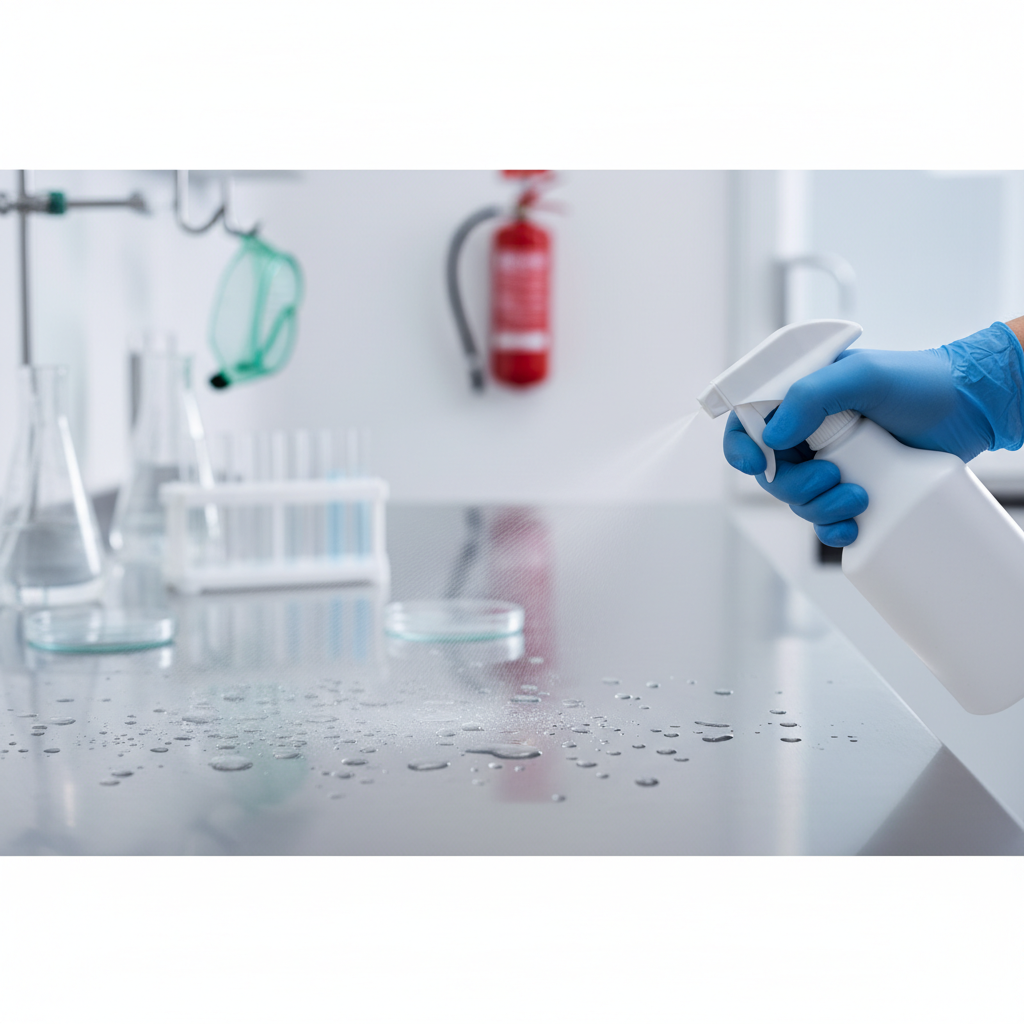
Bloodborne pathogens survive on surfaces far longer than most people think. Hepatitis B remains infectious for at least 7 days on dry surfaces. Hepatitis C can survive up to 6 weeks at room temperature. HIV is the least resilient, typically surviving hours to days outside the body — but up to 42 days in a used syringe. Dried blood is not safe blood. Proper disinfection with a 1:10 bleach solution or an EPA-registered tuberculocidal product is required to eliminate these pathogens from contaminated surfaces.
Pathogen Survival Times at a Glance
The following table summarizes the best available research on how long the three major bloodborne pathogens survive on environmental surfaces. These are not theoretical estimates — they are based on peer-reviewed laboratory studies and CDC clinical data.
| Pathogen | Survival on Dry Surfaces | Survival in Liquid Blood | Survival in Syringes/Needles | Infectivity Level | Key Source |
|---|---|---|---|---|---|
| Hepatitis B (HBV) | At least 7 days | Weeks to months | Weeks or longer | 50–100x more infectious than HIV | CDC Clinical Overview; Bond et al., J Infect Dis 1981 |
| Hepatitis C (HCV) | Up to 6 weeks (42 days) | Weeks to months | Up to 63 days | 10x more infectious than HIV | Doerrbecker et al., J Infect Dis 2013; Paintsil et al., J Infect Dis 2014 |
| HIV | Hours to days (rapidly declining) | Days (at room temp) | Up to 42 days | Lowest of the three major BBPs | CDC HIV Transmission Fact Sheet; Tjotta et al., J Med Virol 1991 |
| MRSA | Days to weeks | N/A (not bloodborne; wound pathogen) | N/A | Contact transmission via open wounds | Kramer et al., BMC Infect Dis 2006 |
| Syphilis (T. pallidum) | Minutes to hours | Up to 5 days (4°C) | N/A | Fragile; dies quickly outside the body | CDC STI Treatment Guidelines |
The pathogen most people worry about — HIV — is actually the least resilient on surfaces. Hepatitis B and C are far more dangerous in a cleanup context because they remain infectious for days to weeks on dry surfaces at room temperature. Any blood cleanup protocol must be designed to kill HBV and HCV, not just HIV.
Hepatitis B (HBV): The Most Resilient Threat
Hepatitis B is the single most dangerous pathogen in any blood cleanup scenario. Here is what the research tells us:
- Surface survival: The CDC states that HBV “can survive outside the body for at least 7 days. During that time, the virus can still cause infection if it enters the body of a person who is not protected by the vaccine.”
- Exceptional stability: Bond et al. (1981) demonstrated that HBV dried onto surfaces at room temperature remained infectious for at least one week. Subsequent research by Kampf et al. (2019) found HBV infectivity persisting with a half-life of more than 22 days under favorable conditions.
- Infectivity: HBV is 50–100 times more infectious than HIV. The estimated risk of infection from a single needlestick exposure to HBV-positive blood is 6–30%, compared to just 0.3% for HIV.
- Invisible threat: Concentrations of HBV too small to see with the naked eye can still transmit infection. A microscopic speck of dried, HBV-contaminated blood on a surface is enough to cause infection through a small cut or mucous membrane contact.
The Hepatitis B vaccine is 95% effective at preventing infection and is the single best protection against HBV exposure during blood cleanup. OSHA requires employers to offer free HBV vaccination to all employees with occupational exposure to blood. If you are regularly exposed to blood in any capacity, get vaccinated.
Hepatitis C (HCV): Weeks of Hidden Danger
Hepatitis C was long underestimated as a surface contamination risk. Landmark research in 2013 changed that understanding:
- Surface survival: Doerrbecker et al. (2013), published in the Journal of Infectious Diseases, demonstrated that HCV dried onto surfaces at room temperature (22°C) maintained full infectivity for up to 6 weeks (42 days). This was a groundbreaking finding that contradicted previous assumptions.
- In syringes: Paintsil et al. (2014) found HCV can survive in used syringes for up to 63 days, depending on temperature and syringe type.
- Temperature sensitivity: HCV survives longer at lower temperatures. At 4°C (refrigerator temperature), survival times extend even further. At higher temperatures (37°C+), survival decreases.
- No vaccine: Unlike Hepatitis B, there is no vaccine for Hepatitis C. Prevention depends entirely on avoiding exposure and proper decontamination of surfaces.
If blood has been on a surface for less than 6 weeks and you don’t know the source, treat it as potentially infectious for Hepatitis C. The old assumption that “dried blood is safe after a few days” has been conclusively disproven. Proper disinfection is required regardless of how long the blood has been there.
HIV: Less Resilient Than You Think
HIV dominates public concern about blood exposure, but it is actually the most fragile of the three major bloodborne pathogens on surfaces:
- Surface survival: The CDC states that HIV “does not survive long outside the human body (such as on surfaces), and it cannot reproduce outside a human host.” In laboratory conditions, HIV dried onto a surface shows a 90–99% reduction in viral concentration within hours.
- Real-world conditions: Under typical environmental conditions (room temperature, normal humidity, exposure to air), HIV on a surface becomes non-infectious within hours to a few days. The virus is particularly sensitive to drying.
- In syringes: HIV survives significantly longer in a protected, moist environment. Studies have found viable HIV in used syringes for up to 42 days, though infectivity decreases with time and higher temperatures.
- Needlestick risk: The estimated risk of HIV transmission from a single needlestick with HIV-contaminated blood is approximately 0.3% — far lower than HBV (6–30%) or HCV (1.8%).
This does not mean HIV-contaminated blood is safe to handle casually. Universal precautions exist because you rarely know what pathogens blood contains. Treating all blood as potentially infectious for all three pathogens is the correct approach.
Other Bloodborne Pathogens
While HIV, HBV, and HCV receive the most attention, blood can carry additional pathogens:
| Pathogen | Surface Survival | Transmission Risk from Blood |
|---|---|---|
| MRSA (Methicillin-resistant Staphylococcus aureus) | Days to weeks on fabrics, plastics, steel | Enters through open wounds, cuts, or abrasions. Common in blood from skin infections. |
| Syphilis (Treponema pallidum) | Minutes to hours (very fragile) | Primarily sexual transmission; blood transfusion risk exists but surface transmission is rare. |
| Malaria (Plasmodium species) | Limited surface survival | Blood-to-blood only (needlestick, transfusion). Not a surface contact risk. |
| Human T-cell Lymphotropic Virus (HTLV) | Limited data; likely hours | Similar to HIV but less studied. Primarily needle or transfusion transmission. |
| Brucellosis | Weeks in moist conditions | Occupational risk for lab workers and those handling animal blood. |
Factors That Affect Survival Time
Pathogen survival on surfaces is not fixed — it varies based on environmental conditions. Understanding these factors explains why survival times reported in studies show ranges rather than exact numbers.
Temperature
Lower temperatures extend survival. HCV and HBV survive longer at 4°C than at room temperature, and longer at room temperature than at 37°C. Freezing does not kill most bloodborne pathogens — it preserves them. High heat (>60°C sustained) is required for thermal inactivation.
Humidity
Higher humidity generally extends pathogen survival by slowing desiccation. However, the relationship is not linear. HBV, for example, survives well even in dried blood, making humidity less of a protective factor than most people assume.
Blood Volume
Larger volumes of blood protect pathogens by keeping the interior moist even as the surface dries. A pool of blood takes much longer to fully desiccate than a thin smear, extending the window of infectivity for all contained pathogens.
Surface Type
Non-porous surfaces (metal, glass, sealed tile) allow blood to dry and be fully disinfected. Porous surfaces (carpet, wood, fabric, concrete) absorb blood, protecting pathogens from both drying and disinfectants. Blood in porous materials cannot be reliably disinfected — the material must be removed.
UV Light Exposure
Ultraviolet light degrades many pathogens over time. Surfaces exposed to direct sunlight have shorter pathogen survival than shaded or indoor surfaces. However, UV light cannot penetrate dried blood crusts or reach pathogens absorbed into materials.
Organic Load
Blood itself provides a protective matrix for pathogens. The protein content of blood shields viruses from environmental degradation. This is why disinfectants must be applied after visible blood is removed — the organic material literally shields pathogens from chemical agents.
What Kills Bloodborne Pathogens on Surfaces
Not all cleaning products are effective against bloodborne pathogens. Here is what the science confirms:
| Method | Effective Against | Requirements | Notes |
|---|---|---|---|
| Sodium hypochlorite (bleach) 1:10 dilution | HIV, HBV, HCV, MRSA, most bacteria and viruses | 10 minutes contact time on pre-cleaned surface | CDC gold standard. Must remove visible blood first — bleach is inactivated by organic matter. |
| EPA-registered tuberculocidal disinfectants | HIV, HBV, HCV, TB, broad-spectrum | Per label (typically 5–10 min) | CDC-recommended hospital-grade alternative. Check EPA List S for approved products. |
| Accelerated hydrogen peroxide (0.5%+) | HIV, HBV, HCV, broad-spectrum | 1–5 minutes depending on formulation | Professional-grade products only. Standard 3% drugstore peroxide is not sufficient. |
| Heat (autoclaving: 121°C / 250°F) | All known pathogens | 15–30 minutes at temperature | Used for medical instruments. Not practical for environmental surfaces. |
| Phenolic disinfectants | HIV, HBV, TB, broad-spectrum | 10 minutes typical | Strong odor. Requires ventilation. Common in professional settings. |
⚠ What Does NOT Kill Bloodborne Pathogens
Is Dried Blood Still Dangerous?
This is one of the most commonly asked questions — and one of the most dangerously misunderstood topics. The answer is unequivocal: yes, dried blood can still be infectious.
- HBV in dried blood remains infectious for at least 7 days (CDC). Some research suggests even longer under favorable conditions.
- HCV in dried blood at room temperature maintained full infectivity for 6 weeks (Doerrbecker et al., 2013). This was demonstrated by recovering viable virus from dried blood spots and confirming its ability to infect liver cells in culture.
- HIV in dried blood degrades rapidly but is not instantly eliminated. Laboratory studies show measurable viral survival for several days even in thin, dried films.
The visual appearance of blood tells you nothing about its infectivity. A brown, dried bloodstain that “looks old” can harbor fully infectious Hepatitis B or C virus. The only way to make a blood-contaminated surface safe is proper disinfection.
OSHA’s Bloodborne Pathogen Standard is built on the principle of Universal Precautions: treat all human blood and certain body fluids as if they are infectious, regardless of the perceived health status of the source individual. You cannot tell by looking at blood — or at a person — whether it contains HIV, Hepatitis B, or Hepatitis C. Act accordingly.
OSHA Standards and Legal Requirements
OSHA’s Bloodborne Pathogen Standard (29 CFR 1910.1030) establishes mandatory requirements for any workplace where employees may encounter blood or other potentially infectious materials (OPIM). The standard exists precisely because of pathogen survival data — the scientific evidence that bloodborne pathogens persist on surfaces long enough to cause workplace infections.
Key provisions relevant to pathogen survival:
- Universal Precautions: All blood must be treated as infectious. No exceptions based on “how old it looks.”
- Decontamination: Work surfaces must be decontaminated with an appropriate disinfectant after contact with blood. Equipment must be decontaminated before servicing or reuse.
- Regulated waste: Contaminated materials (gloves, towels, absorbents) must be disposed of in labeled, leak-proof containers.
- PPE: Employers must provide gloves, face protection, and gowns at no cost. Employees must use them when blood exposure is reasonably anticipated.
- Post-exposure evaluation: If an employee is exposed, the employer must provide a confidential medical evaluation and follow-up at no cost.
Violations of the BBP standard carry penalties of up to $16,131 per violation (2026 OSHA penalty schedule). Willful violations can reach $161,323. For detailed compliance requirements, see our guide to OSHA bloodborne pathogen rules every business must follow.
Practical Safety Guide
Whether you have encountered blood at home, at work, or in a public space, here is how to apply pathogen survival knowledge to stay safe:
Assume It’s Infectious
Unless you are cleaning your own blood from a known minor injury, treat all blood as potentially carrying HBV, HCV, and HIV. This is not paranoia — it is the medical standard (Universal Precautions).
Don’t Touch It Bare-Handed
Put on disposable nitrile gloves before any contact. If there is any splash risk, add eye protection (safety glasses or goggles). Bloodborne pathogens enter through mucous membranes and microscopic skin breaks you may not even know you have.
Assess the Scope
A few drops on a hard surface? Likely safe for DIY cleanup with proper precautions. Blood on porous materials, large volumes, or blood from an unknown source? Call a professional. The pathogen load increases with volume, and porous materials cannot be reliably disinfected.
Clean, Then Disinfect (Two Steps)
First remove visible blood with disposable absorbent materials. Then apply a 1:10 bleach solution or EPA-registered tuberculocidal disinfectant to the cleaned surface. Allow at least 10 minutes of contact time. Disinfectant applied directly to blood is inactivated by organic matter — you must clean first.
Dispose and Decontaminate
All contaminated materials go into a sealed plastic bag. Remove gloves by peeling them inside out. Wash hands with soap and water for at least 20 seconds. If you were in a workplace, follow your Exposure Control Plan for waste disposal.
Seek Medical Advice if Exposed
If blood contacted your eyes, mouth, an open wound, or broken skin, seek medical evaluation promptly. Post-exposure prophylaxis (PEP) for HIV is most effective when started within 72 hours. HBV post-exposure treatment (HBIG + vaccine) should begin within 24 hours.
Frequently Asked Questions
How long does Hepatitis B survive on a dry surface?
At least 7 days according to the CDC, and potentially longer under favorable conditions. HBV is the most environmentally stable of the three major bloodborne pathogens and can infect through microscopic skin breaks even from invisible amounts of dried blood.
Can you get Hepatitis C from dried blood?
Yes. Research published in the Journal of Infectious Diseases (Doerrbecker et al., 2013) demonstrated that Hepatitis C virus recovered from dried blood spots at room temperature maintained full infectivity for up to 6 weeks (42 days). Dried blood that appears old and harmless can absolutely transmit HCV.
How long does HIV survive outside the body?
On surfaces, HIV survival drops rapidly once blood dries. The CDC states HIV “does not survive long outside the human body.” Under typical room conditions, HIV in a dried blood film becomes non-infectious within hours to a few days. However, HIV can survive up to 42 days inside a used syringe where it remains in a moist, protected environment.
Does bleach kill bloodborne pathogens?
Yes. A 1:10 dilution of household bleach (5.25%–6.15% sodium hypochlorite) with at least 10 minutes of contact time kills HIV, HBV, and HCV on surfaces. The critical requirement is that visible blood must be removed first — bleach is inactivated by organic matter and will not penetrate a blood film to reach the pathogens underneath.
Can bloodborne pathogens go through intact skin?
Bloodborne pathogens generally cannot penetrate healthy, intact skin. However, they can enter through cuts, abrasions, hangnails, dermatitis, acne, and any other break in the skin — many of which are too small to notice. They also enter through mucous membranes (eyes, nose, mouth), which is why splash protection is important during any blood cleanup.
When is blood no longer dangerous?
There is no safe “expiration date” for blood on surfaces. While HIV degrades within days, Hepatitis B remains infectious for at least a week and Hepatitis C for up to 6 weeks. The only way to make a blood-contaminated surface safe is proper disinfection — not waiting. If you are unsure whether a surface has been properly disinfected, treat it as contaminated.
Is a small amount of dried blood dangerous?
It can be. Hepatitis B is so infectious that microscopic amounts of blood — quantities invisible to the naked eye — can transmit the virus. The risk depends on the pathogen present, but since you typically cannot know what a blood sample contains, Universal Precautions treat all blood as potentially infectious regardless of quantity.
Should I call a professional for old bloodstains?
If the blood source is unknown and the stain is on a porous surface (carpet, wood, fabric, mattress), professional cleanup is recommended. Porous materials absorb blood and cannot be reliably disinfected with surface-applied products. For non-porous surfaces, proper disinfection with bleach or an EPA-registered product is sufficient, but if you are uncomfortable handling the cleanup, professional help is always available.
Sources: CDC Hepatitis B Clinical Overview; Doerrbecker et al., “Hepatitis C Virus Maintains Infectivity for Weeks After Drying on Inanimate Surfaces,” J Infect Dis 2013 (PMC3969546); Kampf et al., “High Environmental Stability of Hepatitis B Virus,” J Hosp Infect 2019; CDC HIV Transmission Risk Estimates; Paintsil et al., “Survival of Hepatitis C Virus in Syringes,” J Infect Dis 2014; Bond et al., “Survival of Hepatitis B Virus After Drying and Storage for One Week,” Lancet 1981; OSHA 29 CFR 1910.1030.
Concerned About Blood Contamination?
If you are dealing with blood on surfaces and are unsure whether it has been properly disinfected, a professional biohazard cleanup company can assess and remediate the situation safely. BioCleaners Directory connects you with verified, OSHA-compliant providers nationwide.